


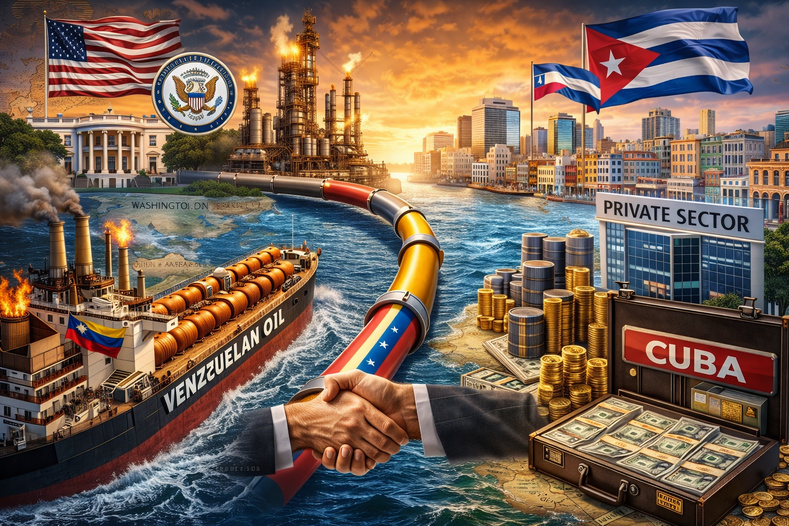
The United States has moved to authorize licensed companies to resell Venezuelan oil to Cuba’s private sector, marking a calibrated shift in sanctions policy designed to ease humanitarian strain while maintaining pressure on state institutions. The guidance, issued by the U.S. Treasury, permits transactions that demonstrably support private Cuban businesses but excludes dealings that benefit the Cuban military or other government-controlled entities.
The decision reflects a nuanced approach to two longstanding policy objectives: constraining authoritarian regimes while mitigating economic hardship for ordinary citizens. By allowing licensed intermediaries to redirect Venezuelan crude and fuel toward private Cuban importers, Washington is attempting to carve out a controlled channel for energy flows without restoring broad state-to-state arrangements that previously underpinned Havana’s supply.
The move comes against the backdrop of Cuba’s acute fuel shortages and Venezuela’s restructured export landscape, both of which have reshaped energy dynamics across the Caribbean.
Sanctions Architecture and Strategic Recalibration
For years, Venezuela supplied Cuba with crude oil and refined products under preferential arrangements that formed a cornerstone of their political alliance. In exchange for oil shipments, Cuba provided services ranging from medical personnel to technical assistance. That bilateral model was deeply intertwined with the political economy of both nations.
However, intensified U.S. sanctions and shifts in Venezuelan export controls disrupted those flows. With Washington exerting oversight over Venezuelan oil sales and proceeds, cargoes bound for allied governments ceased or required explicit authorization. The resulting vacuum contributed to electricity blackouts, transportation disruptions and broader economic stress in Cuba.
The Treasury’s new guidance does not signal a rollback of sanctions. Instead, it differentiates between state-controlled channels and private enterprise. By authorizing resale under specific licensing conditions, U.S. policymakers aim to create a humanitarian corridor that supports independent Cuban businesses without strengthening government finances.
This distinction is central to the policy’s design. Transactions must be structured so that proceeds and benefits accrue to private entities rather than state agencies or security apparatuses. The approach aligns with broader U.S. efforts to encourage private-sector development within Cuba’s tightly regulated economy.
Energy Scarcity and Economic Pressures in Cuba
Cuba’s energy crisis has intensified in recent years due to a combination of aging infrastructure, reduced external supply and limited foreign exchange reserves. Power generation relies heavily on imported fuel, and shortfalls have led to rolling blackouts and curtailed industrial output.
Fuel scarcity has also affected transportation, aviation and agriculture, compounding inflationary pressures. Although the Cuban government has authorized micro, small and medium-sized enterprises to import fuel, access to reliable supply has remained constrained by sanctions and financing challenges.
Allowing resale of Venezuelan oil to private-sector buyers introduces a potential stabilizing mechanism. Independent businesses—including airlines, logistics operators and manufacturing firms—could secure fuel through licensed intermediaries. In theory, this could alleviate bottlenecks without channeling revenue directly to state distributors.
Yet affordability remains a critical question. Private Cuban firms operate in a currency environment marked by shortages of hard currency and fluctuating exchange rates. Even if oil is legally available, payment capacity may limit uptake.
Venezuela’s Export Realignment
Venezuela’s oil sector has undergone significant restructuring amid sanctions and operational disruptions. International trading houses now play a larger role in marketing Venezuelan crude, often facilitating sales to buyers in North America, Europe and Asia under compliance frameworks aligned with U.S. oversight.
The Treasury’s guidance expands the universe of potential transactions by permitting licensed resales destined for Cuban private entities. This could provide incremental demand for Venezuelan barrels while preserving Washington’s leverage over ultimate buyers.
The policy also signals to global traders that the United States is willing to differentiate between political alliances and humanitarian considerations. Allies of Venezuela that previously benefited from preferential supply arrangements may now be required to transact at market prices under stricter scrutiny.
By integrating Cuban private importers into this controlled resale channel, Washington is effectively reshaping the triangular relationship among U.S. regulators, Venezuelan exporters and Cuban consumers.
Humanitarian Framing and Political Messaging
U.S. officials have emphasized that Cuba’s economic hardship stems primarily from domestic governance rather than external embargoes. The targeted oil resale authorization reinforces that narrative by demonstrating willingness to facilitate private-sector access while restricting state channels.
This framing seeks to counter arguments that sanctions constitute a blanket energy blockade. By delineating permissible transactions, the policy attempts to balance humanitarian optics with strategic pressure.
For Havana, the measure presents both opportunity and constraint. Private importers may gain greater operational autonomy, but the state’s dominant role in fuel distribution remains largely intact. The government controls key infrastructure, including refineries, ports and distribution networks, which may influence how privately imported fuel is integrated into the broader system.
Implementation Challenges and Market Signals
Operationalizing the policy will require careful licensing and monitoring. Companies seeking to resell Venezuelan oil must demonstrate compliance with U.S. regulations and ensure that counterparties meet eligibility criteria. Documentation, financial transparency and cargo tracking will likely be scrutinized.
The broader market response may depend on clarity and consistency in enforcement. Traders and insurers typically demand legal certainty before engaging in sanctioned jurisdictions. Clear guidance from U.S. authorities could mitigate risk perceptions and encourage participation.
Shipping patterns in the Caribbean have already reflected uncertainty, with some cargoes delayed or awaiting authorization. The new framework may reduce logistical ambiguity, though it will not eliminate the complexities inherent in sanctioned trade corridors.
From a geopolitical perspective, the decision illustrates a calibrated shift from blanket restrictions toward targeted engagement. It preserves the architecture of sanctions while introducing flexibility to address humanitarian needs and private-sector development.
The allowance for resale of Venezuelan oil to Cuba’s private sector thus represents more than a technical adjustment. It reflects an attempt to recalibrate pressure tools in a way that separates political leverage from civilian hardship, reshaping energy flows in a region where oil supply has long been intertwined with ideology and diplomacy.
(Source:www.dw.com)
The decision reflects a nuanced approach to two longstanding policy objectives: constraining authoritarian regimes while mitigating economic hardship for ordinary citizens. By allowing licensed intermediaries to redirect Venezuelan crude and fuel toward private Cuban importers, Washington is attempting to carve out a controlled channel for energy flows without restoring broad state-to-state arrangements that previously underpinned Havana’s supply.
The move comes against the backdrop of Cuba’s acute fuel shortages and Venezuela’s restructured export landscape, both of which have reshaped energy dynamics across the Caribbean.
Sanctions Architecture and Strategic Recalibration
For years, Venezuela supplied Cuba with crude oil and refined products under preferential arrangements that formed a cornerstone of their political alliance. In exchange for oil shipments, Cuba provided services ranging from medical personnel to technical assistance. That bilateral model was deeply intertwined with the political economy of both nations.
However, intensified U.S. sanctions and shifts in Venezuelan export controls disrupted those flows. With Washington exerting oversight over Venezuelan oil sales and proceeds, cargoes bound for allied governments ceased or required explicit authorization. The resulting vacuum contributed to electricity blackouts, transportation disruptions and broader economic stress in Cuba.
The Treasury’s new guidance does not signal a rollback of sanctions. Instead, it differentiates between state-controlled channels and private enterprise. By authorizing resale under specific licensing conditions, U.S. policymakers aim to create a humanitarian corridor that supports independent Cuban businesses without strengthening government finances.
This distinction is central to the policy’s design. Transactions must be structured so that proceeds and benefits accrue to private entities rather than state agencies or security apparatuses. The approach aligns with broader U.S. efforts to encourage private-sector development within Cuba’s tightly regulated economy.
Energy Scarcity and Economic Pressures in Cuba
Cuba’s energy crisis has intensified in recent years due to a combination of aging infrastructure, reduced external supply and limited foreign exchange reserves. Power generation relies heavily on imported fuel, and shortfalls have led to rolling blackouts and curtailed industrial output.
Fuel scarcity has also affected transportation, aviation and agriculture, compounding inflationary pressures. Although the Cuban government has authorized micro, small and medium-sized enterprises to import fuel, access to reliable supply has remained constrained by sanctions and financing challenges.
Allowing resale of Venezuelan oil to private-sector buyers introduces a potential stabilizing mechanism. Independent businesses—including airlines, logistics operators and manufacturing firms—could secure fuel through licensed intermediaries. In theory, this could alleviate bottlenecks without channeling revenue directly to state distributors.
Yet affordability remains a critical question. Private Cuban firms operate in a currency environment marked by shortages of hard currency and fluctuating exchange rates. Even if oil is legally available, payment capacity may limit uptake.
Venezuela’s Export Realignment
Venezuela’s oil sector has undergone significant restructuring amid sanctions and operational disruptions. International trading houses now play a larger role in marketing Venezuelan crude, often facilitating sales to buyers in North America, Europe and Asia under compliance frameworks aligned with U.S. oversight.
The Treasury’s guidance expands the universe of potential transactions by permitting licensed resales destined for Cuban private entities. This could provide incremental demand for Venezuelan barrels while preserving Washington’s leverage over ultimate buyers.
The policy also signals to global traders that the United States is willing to differentiate between political alliances and humanitarian considerations. Allies of Venezuela that previously benefited from preferential supply arrangements may now be required to transact at market prices under stricter scrutiny.
By integrating Cuban private importers into this controlled resale channel, Washington is effectively reshaping the triangular relationship among U.S. regulators, Venezuelan exporters and Cuban consumers.
Humanitarian Framing and Political Messaging
U.S. officials have emphasized that Cuba’s economic hardship stems primarily from domestic governance rather than external embargoes. The targeted oil resale authorization reinforces that narrative by demonstrating willingness to facilitate private-sector access while restricting state channels.
This framing seeks to counter arguments that sanctions constitute a blanket energy blockade. By delineating permissible transactions, the policy attempts to balance humanitarian optics with strategic pressure.
For Havana, the measure presents both opportunity and constraint. Private importers may gain greater operational autonomy, but the state’s dominant role in fuel distribution remains largely intact. The government controls key infrastructure, including refineries, ports and distribution networks, which may influence how privately imported fuel is integrated into the broader system.
Implementation Challenges and Market Signals
Operationalizing the policy will require careful licensing and monitoring. Companies seeking to resell Venezuelan oil must demonstrate compliance with U.S. regulations and ensure that counterparties meet eligibility criteria. Documentation, financial transparency and cargo tracking will likely be scrutinized.
The broader market response may depend on clarity and consistency in enforcement. Traders and insurers typically demand legal certainty before engaging in sanctioned jurisdictions. Clear guidance from U.S. authorities could mitigate risk perceptions and encourage participation.
Shipping patterns in the Caribbean have already reflected uncertainty, with some cargoes delayed or awaiting authorization. The new framework may reduce logistical ambiguity, though it will not eliminate the complexities inherent in sanctioned trade corridors.
From a geopolitical perspective, the decision illustrates a calibrated shift from blanket restrictions toward targeted engagement. It preserves the architecture of sanctions while introducing flexibility to address humanitarian needs and private-sector development.
The allowance for resale of Venezuelan oil to Cuba’s private sector thus represents more than a technical adjustment. It reflects an attempt to recalibrate pressure tools in a way that separates political leverage from civilian hardship, reshaping energy flows in a region where oil supply has long been intertwined with ideology and diplomacy.
(Source:www.dw.com)
 Homepage
 Send to a friend
 Printable version
 Share
Share


