


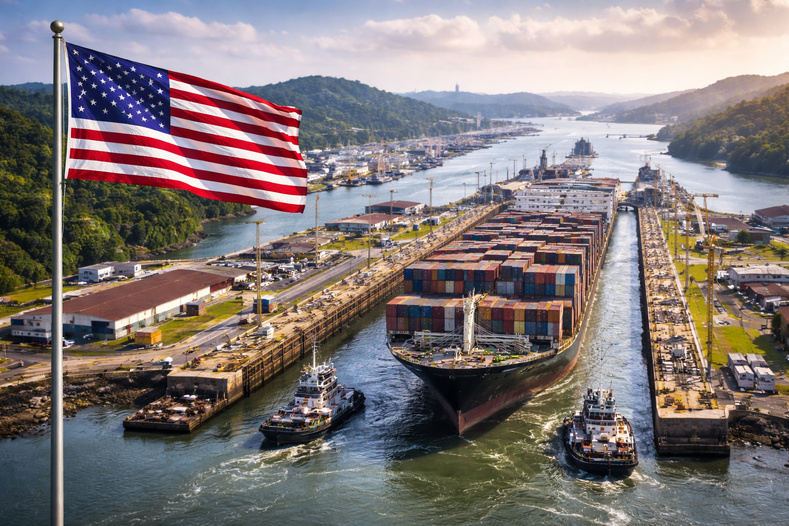
The ruling by Panama’s highest court invalidating port concessions held by a Hong Kong-based conglomerate has reverberated far beyond Central America. At stake is not merely the future management of key logistics hubs at either end of the Panama Canal, but the balance of influence in one of the world’s most strategically sensitive waterways. For Donald Trump, the decision represents a tangible geopolitical win, reinforcing his administration’s long-running argument that U.S. security interests in the Western Hemisphere have been eroded by China’s quiet expansion through commercial footholds rather than overt military presence.
The judgment has elevated a legal dispute into a symbol of great-power rivalry. It underscores how infrastructure, contracts, and constitutional law have become tools in a broader contest over influence, trade routes, and strategic depth. In that sense, the ruling does not simply settle a Panamanian legal question; it sharpens the competitive edge between Washington and Beijing in a region the United States has long considered its strategic backyard.
Why the Panama Canal remains a geopolitical flashpoint
The Panama Canal’s importance is not historical nostalgia but contemporary reality. As a chokepoint connecting the Atlantic and Pacific Oceans, it underpins global trade flows, energy shipments, and military logistics. Control over surrounding ports does not equate to control of the canal itself, but it provides leverage over access, information, and commercial rhythms that matter enormously in both peace and crisis.
For decades, the canal symbolized U.S. engineering dominance and hemispheric authority. Its transfer to Panamanian control was predicated on the assumption that neutrality would prevail and that no rival power would gain undue influence. As China’s global footprint expanded through ports, logistics firms, and infrastructure finance, that assumption came under strain.
From Washington’s perspective, Chinese-linked companies operating at both ends of the canal created a strategic ambiguity it found unacceptable. The court ruling now resolves that ambiguity decisively in Panama’s favor—and, by extension, in Washington’s.
How legal sovereignty intersects with great-power rivalry
The Panamanian court’s finding that the concession arrangements violated the country’s constitution reframes the dispute as one of national sovereignty rather than foreign pressure. That distinction matters. It allows Panama to assert control without appearing to act as a proxy for U.S. policy, even as the outcome aligns neatly with American strategic objectives.
For the Trump administration, this legal framing is invaluable. It reinforces the narrative that concerns about Chinese influence are not ideological paranoia but shared by local institutions tasked with defending constitutional order. In the competition with China, legitimacy is as important as leverage, and rulings grounded in domestic law provide a powerful form of validation.
The decision also sets a precedent. It signals to other governments in the region that contracts involving strategic infrastructure may be revisited under constitutional or national interest grounds, particularly when geopolitical contexts change.
Trump’s hemispheric strategy gains momentum
Trump has consistently framed the Western Hemisphere as a zone where U.S. dominance should be unquestioned. His rhetoric has revived—and rebranded—long-standing doctrines about regional primacy, recasting them for an era of economic statecraft rather than colonial control.
The Panama ruling strengthens that approach by delivering a concrete outcome rather than a rhetorical flourish. It allows Trump to point to results: Chinese-linked influence curtailed, U.S. security concerns acknowledged, and regional sovereignty reinforced. In domestic political terms, it bolsters his image as a leader willing to confront Beijing not just in Asia, but globally.
It also validates a broader strategy of contesting China through institutions and law rather than direct confrontation. Instead of sanctions or military posturing, the outcome emerged through judicial review—a method that carries fewer immediate risks while still reshaping strategic terrain.
From Beijing’s standpoint, the decision raises alarms beyond the immediate commercial loss. Chinese companies have often relied on long-term concessions and infrastructure partnerships as anchors for global trade integration. If such arrangements can be overturned on constitutional grounds years after being granted, it introduces uncertainty into China’s overseas investment model.
More broadly, Beijing views the ruling as part of a pattern in which political pressure is applied indirectly through regulatory, legal, or security mechanisms. The fear is not confined to Panama. It extends to other regions where Chinese firms operate ports, power grids, and logistics hubs under agreements that could come under renewed scrutiny as geopolitical alignments shift.
The strong response from Chinese officials reflects concern that legal processes are being weaponized to contain China’s rise. Whether or not that perception is accurate, it highlights how deeply infrastructure has become entangled with national power.
The commercial ripple effects and strategic realignment
The ruling also complicates major global transactions involving port assets. Plans to reshuffle ownership of dozens of ports worldwide now face added legal and political risk. Investors, shipping companies, and governments must factor in not only commercial viability but also geopolitical acceptability.
For the United States, this recalibration is welcome. It aligns private capital flows more closely with strategic priorities, reducing the risk that critical infrastructure ends up under the influence of rival powers. For Panama, it presents both opportunity and challenge: reclaiming sovereignty while ensuring continued investment and operational stability.
The episode reinforces a broader trend in which global infrastructure is no longer judged solely on efficiency or profitability. Strategic alignment has become a prerequisite, reshaping how deals are structured and approved.
The Panama Canal as a test case for U.S.-China competition
What makes the Panama Canal case distinctive is its symbolic weight. Few assets carry such historical resonance or contemporary importance. A legal decision affecting operations around the canal inevitably resonates as a statement about who sets the rules of global commerce.
For Trump, the ruling offers proof that pressure—political, rhetorical, and strategic—can yield results without direct intervention. It also strengthens his argument that U.S. vigilance is necessary to prevent gradual erosion of influence through ostensibly commercial channels.
For China, the case serves as a warning that economic reach does not guarantee political acceptance, particularly in regions with strong historical ties to Washington.
The Panama decision illustrates how modern power struggles increasingly unfold through courts, contracts, and regulatory frameworks rather than overt confrontation. Infrastructure has become the terrain on which sovereignty, security, and influence intersect.
In that environment, Trump’s boost is less about a single ruling and more about momentum. It reinforces a strategy that treats economic presence as inseparable from geopolitical power and insists on challenging rivals wherever strategic assets are involved.
The ruling does not end U.S.-China competition in the Western Hemisphere, but it sharpens its contours. It signals that control of critical nodes—ports, canals, logistics corridors—will be contested not only by markets but by states, using every legal and political instrument at their disposal.
As the struggle between Washington and Beijing deepens, the Panama Canal ruling stands as a reminder that even century-old infrastructure can become a frontline in 21st-century power politics.
(Source:www.cnbc.com)
The judgment has elevated a legal dispute into a symbol of great-power rivalry. It underscores how infrastructure, contracts, and constitutional law have become tools in a broader contest over influence, trade routes, and strategic depth. In that sense, the ruling does not simply settle a Panamanian legal question; it sharpens the competitive edge between Washington and Beijing in a region the United States has long considered its strategic backyard.
Why the Panama Canal remains a geopolitical flashpoint
The Panama Canal’s importance is not historical nostalgia but contemporary reality. As a chokepoint connecting the Atlantic and Pacific Oceans, it underpins global trade flows, energy shipments, and military logistics. Control over surrounding ports does not equate to control of the canal itself, but it provides leverage over access, information, and commercial rhythms that matter enormously in both peace and crisis.
For decades, the canal symbolized U.S. engineering dominance and hemispheric authority. Its transfer to Panamanian control was predicated on the assumption that neutrality would prevail and that no rival power would gain undue influence. As China’s global footprint expanded through ports, logistics firms, and infrastructure finance, that assumption came under strain.
From Washington’s perspective, Chinese-linked companies operating at both ends of the canal created a strategic ambiguity it found unacceptable. The court ruling now resolves that ambiguity decisively in Panama’s favor—and, by extension, in Washington’s.
How legal sovereignty intersects with great-power rivalry
The Panamanian court’s finding that the concession arrangements violated the country’s constitution reframes the dispute as one of national sovereignty rather than foreign pressure. That distinction matters. It allows Panama to assert control without appearing to act as a proxy for U.S. policy, even as the outcome aligns neatly with American strategic objectives.
For the Trump administration, this legal framing is invaluable. It reinforces the narrative that concerns about Chinese influence are not ideological paranoia but shared by local institutions tasked with defending constitutional order. In the competition with China, legitimacy is as important as leverage, and rulings grounded in domestic law provide a powerful form of validation.
The decision also sets a precedent. It signals to other governments in the region that contracts involving strategic infrastructure may be revisited under constitutional or national interest grounds, particularly when geopolitical contexts change.
Trump’s hemispheric strategy gains momentum
Trump has consistently framed the Western Hemisphere as a zone where U.S. dominance should be unquestioned. His rhetoric has revived—and rebranded—long-standing doctrines about regional primacy, recasting them for an era of economic statecraft rather than colonial control.
The Panama ruling strengthens that approach by delivering a concrete outcome rather than a rhetorical flourish. It allows Trump to point to results: Chinese-linked influence curtailed, U.S. security concerns acknowledged, and regional sovereignty reinforced. In domestic political terms, it bolsters his image as a leader willing to confront Beijing not just in Asia, but globally.
It also validates a broader strategy of contesting China through institutions and law rather than direct confrontation. Instead of sanctions or military posturing, the outcome emerged through judicial review—a method that carries fewer immediate risks while still reshaping strategic terrain.
From Beijing’s standpoint, the decision raises alarms beyond the immediate commercial loss. Chinese companies have often relied on long-term concessions and infrastructure partnerships as anchors for global trade integration. If such arrangements can be overturned on constitutional grounds years after being granted, it introduces uncertainty into China’s overseas investment model.
More broadly, Beijing views the ruling as part of a pattern in which political pressure is applied indirectly through regulatory, legal, or security mechanisms. The fear is not confined to Panama. It extends to other regions where Chinese firms operate ports, power grids, and logistics hubs under agreements that could come under renewed scrutiny as geopolitical alignments shift.
The strong response from Chinese officials reflects concern that legal processes are being weaponized to contain China’s rise. Whether or not that perception is accurate, it highlights how deeply infrastructure has become entangled with national power.
The commercial ripple effects and strategic realignment
The ruling also complicates major global transactions involving port assets. Plans to reshuffle ownership of dozens of ports worldwide now face added legal and political risk. Investors, shipping companies, and governments must factor in not only commercial viability but also geopolitical acceptability.
For the United States, this recalibration is welcome. It aligns private capital flows more closely with strategic priorities, reducing the risk that critical infrastructure ends up under the influence of rival powers. For Panama, it presents both opportunity and challenge: reclaiming sovereignty while ensuring continued investment and operational stability.
The episode reinforces a broader trend in which global infrastructure is no longer judged solely on efficiency or profitability. Strategic alignment has become a prerequisite, reshaping how deals are structured and approved.
The Panama Canal as a test case for U.S.-China competition
What makes the Panama Canal case distinctive is its symbolic weight. Few assets carry such historical resonance or contemporary importance. A legal decision affecting operations around the canal inevitably resonates as a statement about who sets the rules of global commerce.
For Trump, the ruling offers proof that pressure—political, rhetorical, and strategic—can yield results without direct intervention. It also strengthens his argument that U.S. vigilance is necessary to prevent gradual erosion of influence through ostensibly commercial channels.
For China, the case serves as a warning that economic reach does not guarantee political acceptance, particularly in regions with strong historical ties to Washington.
The Panama decision illustrates how modern power struggles increasingly unfold through courts, contracts, and regulatory frameworks rather than overt confrontation. Infrastructure has become the terrain on which sovereignty, security, and influence intersect.
In that environment, Trump’s boost is less about a single ruling and more about momentum. It reinforces a strategy that treats economic presence as inseparable from geopolitical power and insists on challenging rivals wherever strategic assets are involved.
The ruling does not end U.S.-China competition in the Western Hemisphere, but it sharpens its contours. It signals that control of critical nodes—ports, canals, logistics corridors—will be contested not only by markets but by states, using every legal and political instrument at their disposal.
As the struggle between Washington and Beijing deepens, the Panama Canal ruling stands as a reminder that even century-old infrastructure can become a frontline in 21st-century power politics.
(Source:www.cnbc.com)
 Homepage
 Send to a friend
 Printable version
 Share
Share


