


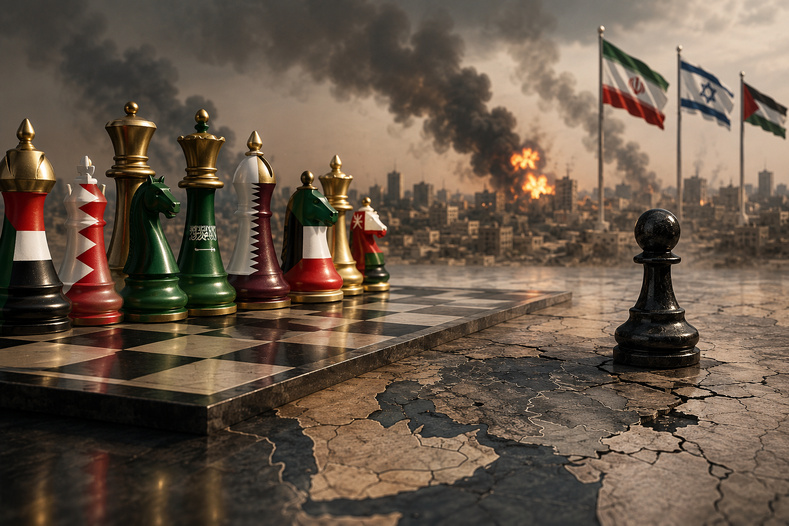
The latest escalation surrounding the Middle East conflict has exposed the growing limits of Gulf soft power despite years of economic expansion, diplomatic outreach and deepening political ties with Washington. Even as Gulf states maintain strong financial relationships with the United States and continue positioning themselves as indispensable regional partners, recent events have demonstrated that wealth, investment leverage and diplomatic access do not always translate into decisive influence during periods of military crisis.
The issue came into sharper focus after the United Arab Emirates confirmed that drones struck the Barakah nuclear power plant, the Gulf’s only civilian nuclear facility. Although the attack caused no radiation leak and only damaged a generator on the perimeter of the site, the incident carried enormous symbolic significance. The UAE later stated that drones had been launched from Iraq, with two intercepted before impact.
The attack reinforced a growing regional reality: despite ceasefire discussions, diplomatic contacts and repeated calls for restraint, the Middle East remains vulnerable to sudden escalation capable of disrupting economic stability and undermining the Gulf’s carefully cultivated image as a secure global business and investment hub.
The strike also highlighted a deeper contradiction shaping Gulf diplomacy. Over the past decade, Gulf states have increasingly relied on soft power tools including sovereign wealth investments, mediation diplomacy, tourism development, global sports partnerships and strategic economic alliances to expand international influence. Yet recent regional events suggest those instruments have limits when confronted with military confrontation involving larger geopolitical powers.
That contradiction is becoming increasingly important as Gulf governments attempt to balance relationships with the United States, China, regional rivals and neighboring states while protecting economic transformation plans dependent on stability.
Economic Influence Has Not Prevented Regional Conflict
The Gulf states have spent years strengthening their international influence through investment diplomacy and economic partnerships. Saudi Arabia, the UAE and Qatar in particular have become major investors across technology, infrastructure, energy and finance sectors worldwide. Their sovereign wealth funds hold substantial stakes in Western companies and maintain deep economic ties with Washington.
This growing financial presence has often been interpreted as evidence that Gulf capitals now possess significant influence over United States foreign policy decisions.
That perception intensified during high-profile visits by President Donald Trump to Gulf states, where discussions involving major investment commitments and defense cooperation reinforced the image of an increasingly strategic United States-Gulf partnership. Gulf governments also positioned themselves as essential intermediaries in regional diplomacy, maintaining communication channels with both Western powers and regional actors including Iran.
However, the recent conflict involving Iran, Israel and the United States has exposed the practical limitations of that influence.
Despite reported appeals from Gulf leaders urging restraint before military escalation, Washington and Israel still moved ahead with strikes targeting Iranian facilities. The resulting regional instability directly damaged Gulf interests by threatening energy infrastructure, disrupting shipping routes and increasing security concerns across major commercial centers.
The Strait of Hormuz became a particular flashpoint. The narrow waterway remains one of the world’s most critical energy corridors, handling a substantial share of global oil and liquefied natural gas exports. Disruption in the strait rapidly affected energy markets and raised fears regarding global supply stability.
For Gulf economies heavily dependent on uninterrupted energy exports and investor confidence, the consequences were immediate. Freight costs increased, insurance premiums surged and the perception of the Gulf as a stable economic zone came under pressure.
This has led analysts and regional observers to increasingly question whether Gulf influence over Washington is as decisive as often portrayed. Access to American policymakers and large-scale economic partnerships may provide leverage during diplomatic negotiations, but they do not necessarily override broader United States strategic calculations during periods of military confrontation.
The conflict therefore revealed a critical reality: Gulf states may shape discussions and encourage restraint, but they cannot fully control the strategic priorities of larger military powers operating in the region.
Security Dependence Continues to Shape Gulf Strategy
Another reason Gulf soft power faces limitations is the region’s continued dependence on external military protection, particularly from the United States.
Despite years of investment in defense systems and regional military modernization, Gulf countries still rely heavily on American security guarantees, intelligence cooperation and military infrastructure. United States naval forces remain deeply embedded across Gulf bases and maritime operations, while Washington continues to function as the region’s primary external security partner.
That dependency creates structural constraints on Gulf diplomacy.
Even when Gulf leaders disagree with specific military actions or regional escalation, their ability to openly challenge Washington remains limited because the broader security relationship remains essential to long-term defense planning. This dynamic became especially visible during recent tensions involving Iran.
Gulf governments publicly emphasized de-escalation and regional stability, yet they also had to manage the reality that their security architecture remains tied closely to United States military power. That balancing act reflects a broader dilemma shaping Gulf foreign policy: maintaining strategic partnerships with Washington while simultaneously attempting to reduce exposure to regional conflict.
The limitations of Gulf soft power were also visible in NATO’s response to the crisis. Senior alliance officials indicated that NATO was not preparing a unified mission in the Strait of Hormuz, partly because member states remained divided over deeper involvement in conflict linked to Iran.
That left regional maritime security dependent largely on smaller coalitions and bilateral arrangements rather than broad international consensus. For Gulf states, this underscored another uncomfortable reality: despite their economic importance, they cannot always guarantee rapid international alignment behind their security concerns.
At the same time, regional governments have increasingly diversified diplomatic relationships beyond the West in an effort to reduce strategic vulnerability. China has expanded economic and energy ties across the Gulf, while Russia and Asian powers maintain growing commercial engagement with regional states.
Yet diversification itself has limits. While China remains a major Gulf energy customer and economic partner, Beijing has generally avoided assuming a direct military role comparable to that of the United States. This leaves Gulf governments continuing to rely on Washington even as they broaden economic partnerships elsewhere.
That imbalance explains why Gulf states remain highly sensitive to fluctuations in United States policy toward Iran and regional conflict.
Maritime Disruption Reveals the Fragility of Regional Stability
The evolving situation in the Strait of Hormuz has become one of the clearest demonstrations of the limits of Gulf soft power and economic influence.
Iran’s expanding operational control over transit routes through the strait has disrupted shipping patterns and exposed vulnerabilities within global energy supply chains. Even limited restrictions or delays in Hormuz can rapidly affect world markets because such a large share of Gulf exports moves through the narrow corridor.
Recent reports involving controlled transit routes, security vetting and diplomatic negotiations for safe passage illustrate how military geography can outweigh economic diplomacy during periods of conflict.
China’s ability to maintain some oil shipments through Iranian-approved transit arrangements also highlighted shifting geopolitical dynamics. Beijing’s approach appeared focused on maintaining energy flows quietly while avoiding direct involvement in regional military disputes.
Meanwhile, Western maritime powers struggled to establish unified responses to the evolving security environment in the Gulf.
The broader consequence has been growing uncertainty surrounding the region’s economic stability. Gulf states have invested heavily in tourism, financial services, real estate and technology sectors as part of wider diversification strategies designed to reduce dependence on oil revenues.
Cities such as Dubai, Abu Dhabi, Doha and Riyadh increasingly market themselves as stable international business hubs capable of attracting global investment and talent. However, regional conflict threatens that image by reintroducing perceptions of geopolitical instability that Gulf governments have spent years attempting to overcome.
The contrast between normal commercial life in Gulf cities and military escalation nearby has become increasingly striking. Shopping malls remain busy, luxury developments continue expanding and international events proceed largely uninterrupted even as maritime security deteriorates across regional waters.
Yet incidents such as drone strikes on strategic facilities reveal how quickly perceptions of stability can shift.
The pressure extends beyond economics into areas such as sports, travel and international mobility. Iran’s football team preparing for visa procedures ahead of the World Cup while regional tensions remain unresolved illustrated how geopolitical conflict increasingly spills into global cultural and sporting arenas.
For Gulf governments, the challenge now is maintaining economic momentum and diplomatic relevance while navigating a security environment increasingly shaped by military escalation, strategic rivalry and shifting global alliances.
The recent conflict has shown that Gulf soft power remains substantial in areas such as investment, mediation and global economic integration. However, it has also demonstrated that during moments of hard geopolitical confrontation, military realities, strategic geography and great-power calculations still define the limits of regional influence more decisively than financial leverage alone.
(Source:www.reuters.com)
The issue came into sharper focus after the United Arab Emirates confirmed that drones struck the Barakah nuclear power plant, the Gulf’s only civilian nuclear facility. Although the attack caused no radiation leak and only damaged a generator on the perimeter of the site, the incident carried enormous symbolic significance. The UAE later stated that drones had been launched from Iraq, with two intercepted before impact.
The attack reinforced a growing regional reality: despite ceasefire discussions, diplomatic contacts and repeated calls for restraint, the Middle East remains vulnerable to sudden escalation capable of disrupting economic stability and undermining the Gulf’s carefully cultivated image as a secure global business and investment hub.
The strike also highlighted a deeper contradiction shaping Gulf diplomacy. Over the past decade, Gulf states have increasingly relied on soft power tools including sovereign wealth investments, mediation diplomacy, tourism development, global sports partnerships and strategic economic alliances to expand international influence. Yet recent regional events suggest those instruments have limits when confronted with military confrontation involving larger geopolitical powers.
That contradiction is becoming increasingly important as Gulf governments attempt to balance relationships with the United States, China, regional rivals and neighboring states while protecting economic transformation plans dependent on stability.
Economic Influence Has Not Prevented Regional Conflict
The Gulf states have spent years strengthening their international influence through investment diplomacy and economic partnerships. Saudi Arabia, the UAE and Qatar in particular have become major investors across technology, infrastructure, energy and finance sectors worldwide. Their sovereign wealth funds hold substantial stakes in Western companies and maintain deep economic ties with Washington.
This growing financial presence has often been interpreted as evidence that Gulf capitals now possess significant influence over United States foreign policy decisions.
That perception intensified during high-profile visits by President Donald Trump to Gulf states, where discussions involving major investment commitments and defense cooperation reinforced the image of an increasingly strategic United States-Gulf partnership. Gulf governments also positioned themselves as essential intermediaries in regional diplomacy, maintaining communication channels with both Western powers and regional actors including Iran.
However, the recent conflict involving Iran, Israel and the United States has exposed the practical limitations of that influence.
Despite reported appeals from Gulf leaders urging restraint before military escalation, Washington and Israel still moved ahead with strikes targeting Iranian facilities. The resulting regional instability directly damaged Gulf interests by threatening energy infrastructure, disrupting shipping routes and increasing security concerns across major commercial centers.
The Strait of Hormuz became a particular flashpoint. The narrow waterway remains one of the world’s most critical energy corridors, handling a substantial share of global oil and liquefied natural gas exports. Disruption in the strait rapidly affected energy markets and raised fears regarding global supply stability.
For Gulf economies heavily dependent on uninterrupted energy exports and investor confidence, the consequences were immediate. Freight costs increased, insurance premiums surged and the perception of the Gulf as a stable economic zone came under pressure.
This has led analysts and regional observers to increasingly question whether Gulf influence over Washington is as decisive as often portrayed. Access to American policymakers and large-scale economic partnerships may provide leverage during diplomatic negotiations, but they do not necessarily override broader United States strategic calculations during periods of military confrontation.
The conflict therefore revealed a critical reality: Gulf states may shape discussions and encourage restraint, but they cannot fully control the strategic priorities of larger military powers operating in the region.
Security Dependence Continues to Shape Gulf Strategy
Another reason Gulf soft power faces limitations is the region’s continued dependence on external military protection, particularly from the United States.
Despite years of investment in defense systems and regional military modernization, Gulf countries still rely heavily on American security guarantees, intelligence cooperation and military infrastructure. United States naval forces remain deeply embedded across Gulf bases and maritime operations, while Washington continues to function as the region’s primary external security partner.
That dependency creates structural constraints on Gulf diplomacy.
Even when Gulf leaders disagree with specific military actions or regional escalation, their ability to openly challenge Washington remains limited because the broader security relationship remains essential to long-term defense planning. This dynamic became especially visible during recent tensions involving Iran.
Gulf governments publicly emphasized de-escalation and regional stability, yet they also had to manage the reality that their security architecture remains tied closely to United States military power. That balancing act reflects a broader dilemma shaping Gulf foreign policy: maintaining strategic partnerships with Washington while simultaneously attempting to reduce exposure to regional conflict.
The limitations of Gulf soft power were also visible in NATO’s response to the crisis. Senior alliance officials indicated that NATO was not preparing a unified mission in the Strait of Hormuz, partly because member states remained divided over deeper involvement in conflict linked to Iran.
That left regional maritime security dependent largely on smaller coalitions and bilateral arrangements rather than broad international consensus. For Gulf states, this underscored another uncomfortable reality: despite their economic importance, they cannot always guarantee rapid international alignment behind their security concerns.
At the same time, regional governments have increasingly diversified diplomatic relationships beyond the West in an effort to reduce strategic vulnerability. China has expanded economic and energy ties across the Gulf, while Russia and Asian powers maintain growing commercial engagement with regional states.
Yet diversification itself has limits. While China remains a major Gulf energy customer and economic partner, Beijing has generally avoided assuming a direct military role comparable to that of the United States. This leaves Gulf governments continuing to rely on Washington even as they broaden economic partnerships elsewhere.
That imbalance explains why Gulf states remain highly sensitive to fluctuations in United States policy toward Iran and regional conflict.
Maritime Disruption Reveals the Fragility of Regional Stability
The evolving situation in the Strait of Hormuz has become one of the clearest demonstrations of the limits of Gulf soft power and economic influence.
Iran’s expanding operational control over transit routes through the strait has disrupted shipping patterns and exposed vulnerabilities within global energy supply chains. Even limited restrictions or delays in Hormuz can rapidly affect world markets because such a large share of Gulf exports moves through the narrow corridor.
Recent reports involving controlled transit routes, security vetting and diplomatic negotiations for safe passage illustrate how military geography can outweigh economic diplomacy during periods of conflict.
China’s ability to maintain some oil shipments through Iranian-approved transit arrangements also highlighted shifting geopolitical dynamics. Beijing’s approach appeared focused on maintaining energy flows quietly while avoiding direct involvement in regional military disputes.
Meanwhile, Western maritime powers struggled to establish unified responses to the evolving security environment in the Gulf.
The broader consequence has been growing uncertainty surrounding the region’s economic stability. Gulf states have invested heavily in tourism, financial services, real estate and technology sectors as part of wider diversification strategies designed to reduce dependence on oil revenues.
Cities such as Dubai, Abu Dhabi, Doha and Riyadh increasingly market themselves as stable international business hubs capable of attracting global investment and talent. However, regional conflict threatens that image by reintroducing perceptions of geopolitical instability that Gulf governments have spent years attempting to overcome.
The contrast between normal commercial life in Gulf cities and military escalation nearby has become increasingly striking. Shopping malls remain busy, luxury developments continue expanding and international events proceed largely uninterrupted even as maritime security deteriorates across regional waters.
Yet incidents such as drone strikes on strategic facilities reveal how quickly perceptions of stability can shift.
The pressure extends beyond economics into areas such as sports, travel and international mobility. Iran’s football team preparing for visa procedures ahead of the World Cup while regional tensions remain unresolved illustrated how geopolitical conflict increasingly spills into global cultural and sporting arenas.
For Gulf governments, the challenge now is maintaining economic momentum and diplomatic relevance while navigating a security environment increasingly shaped by military escalation, strategic rivalry and shifting global alliances.
The recent conflict has shown that Gulf soft power remains substantial in areas such as investment, mediation and global economic integration. However, it has also demonstrated that during moments of hard geopolitical confrontation, military realities, strategic geography and great-power calculations still define the limits of regional influence more decisively than financial leverage alone.
(Source:www.reuters.com)
 Homepage
 Send to a friend
 Printable version
 Share
Share


