


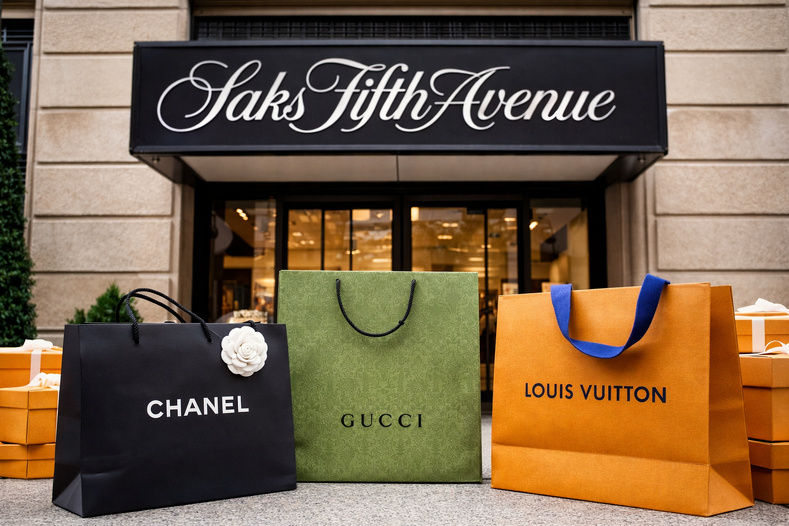
When a major retailer enters bankruptcy, the hierarchy of creditors usually follows a familiar pattern. Landlords, logistics providers, IT vendors, and consultants queue for limited recovery, often with little bargaining power and long waits. The bankruptcy of Saks, however, has exposed a markedly different power dynamic—one in which a narrow circle of global luxury brands holds disproportionate influence over who gets paid early, who waits, and who may ultimately receive nothing at all.
At the heart of this imbalance is the concept of “critical vendors,” a designation that allows select suppliers to be paid ahead of others in order to keep a distressed company operating. While the mechanism is common, its application in the Saks case reflects how deeply modern luxury retail depends on a handful of iconic labels, and how that dependence reshapes creditor negotiations in bankruptcy.
The economic logic behind critical vendor status
Critical vendor treatment exists to preserve enterprise value. Courts allow bankrupt companies to pay certain suppliers early if their goods or services are essential to continued operations. In most retail bankruptcies, these vendors are operationally necessary but strategically interchangeable—warehousing services, software providers, or utilities that can, in theory, be replaced.
Luxury retail operates under a different logic. In this segment, brand identity is not a supporting feature of the business; it is the business. A luxury department store without marquee labels risks immediate irrelevance, regardless of how efficiently it runs. That reality fundamentally alters the definition of “critical.”
For Saks, continued access to elite fashion and beauty brands underpins foot traffic, online engagement, and pricing power. Without them, the retailer’s value proposition collapses, undermining any restructuring effort. This dependence gives certain vendors leverage that extends well beyond the formal creditor hierarchy outlined in bankruptcy law.
Why global luxury brands hold structural power
The brands with the largest claims—such as Chanel, LVMH, and Kering—are not merely suppliers. They are demand generators. Their presence signals status, authenticity, and relevance to high-spending customers, particularly in an environment where luxury consumers are increasingly selective about where they shop.
This creates a form of structural power that is difficult for a bankrupt retailer to counter. If these brands were to halt shipments, pull inventory, or deprioritize the channel, the commercial damage to Saks would be immediate and visible. Sales would suffer not incrementally, but abruptly, weakening confidence among lenders, customers, and potential restructuring partners.
That implicit threat does not need to be voiced to be effective. In negotiations, the knowledge that a retailer is “absolutely dependent” on a few brands is often enough to tilt outcomes in their favor.
Early payouts as a strategic signal
The $120 million pool approved for critical vendors is finite, making inclusion as much about signaling as cash flow. For large luxury brands, early payouts serve two purposes. First, they reduce credit exposure by accelerating recovery on outstanding claims. Second, they reinforce their status as indispensable partners whose interests must be considered throughout the restructuring process.
Smaller brands, by contrast, face a more precarious calculus. Without the same draw or bargaining power, they must decide whether to continue shipping to a retailer that may not prioritize their claims. For many, continued supply represents a gamble: preserve the relationship and hope for eventual recovery, or pull back and risk losing shelf space permanently.
This asymmetry highlights how bankruptcy can magnify existing inequalities within a retailer’s vendor ecosystem, rewarding scale, recognition, and global reach over diversity and niche appeal.
An added layer of complexity comes from concession-based arrangements, common among the largest luxury houses. Under these models, brands retain ownership of inventory until the point of sale, effectively operating branded boutiques within the department store. Because the inventory is not owned by the retailer, these brands are not always classified as traditional unsecured vendors.
This structure can provide a quieter but powerful advantage. Payments to concession partners may flow through revenue-sharing mechanisms rather than the critical vendor pool, freeing up limited funds while still ensuring that marquee brands remain whole. For the largest claimant brands, this means reduced reliance on the contested $120 million pot and greater flexibility in negotiations.
Smaller vendors, who typically sell wholesale and transfer ownership upfront, lack this protection. Their claims sit squarely within the unsecured creditor category, making them more vulnerable to delay or dilution.
Image dependency and the luxury feedback loop
What makes the Saks situation unusual is the degree to which its brand image is tethered to a narrow group of labels. In mass-market retail, assortment breadth often matters more than specific names. In luxury, the opposite is true. A store’s prestige is cumulative, built on the presence of a few globally recognized brands that validate the entire shopping environment.
This creates a feedback loop. The more Saks depends on elite brands to maintain its image, the more leverage those brands gain in moments of financial stress. That leverage, in turn, reinforces their ability to secure favorable terms, deepening the imbalance between top-tier and smaller suppliers.
Over time, this dynamic can reshape the retailer’s assortment strategy, nudging it toward an even heavier reliance on dominant brands at the expense of emerging or niche designers.
For some luxury houses, the bankruptcy process is not only about recovering money owed. It is also an opportunity to influence the retailer’s future direction. Being designated as a critical vendor can open doors to deeper involvement in restructuring discussions, from store strategy to partnership decisions.
Concerns over channel strategy illustrate this point. Some brands are uneasy about luxury goods being distributed through mass-market platforms, viewing such exposure as a threat to exclusivity. A bankruptcy proceeding, where a retailer is especially sensitive to the preferences of its most powerful partners, offers leverage to push back against initiatives that brands perceive as dilutive.
In this sense, early payouts are not merely financial concessions; they are part of a broader negotiation over control, positioning, and long-term alignment.
The limits of collective action by smaller vendors
Faced with marginalization, some smaller suppliers have explored collective negotiation strategies, arguing that variety and discovery also drive customer engagement. While this logic holds in theory, it is difficult to translate into leverage during bankruptcy.
Individual niche brands rarely have the power to materially affect a retailer’s survival. Even collectively, their influence is diffuse compared to the concentrated draw of a single iconic label. Courts and debtors alike tend to prioritize certainty, favoring vendors whose withdrawal would cause immediate harm over those whose absence would be felt gradually, if at all.
As a result, smaller vendors often remain on the periphery of negotiations, with limited visibility into decision-making and few tools to alter outcomes.
The struggle over early payouts at Saks underscores a broader truth about modern luxury retail: financial distress does not level the playing field. Instead, it amplifies existing hierarchies. Brands that dominate consumer attention wield not just market power, but structural influence that extends into legal and financial processes.
For retailers, this raises strategic questions about overdependence on a narrow set of suppliers. For brands, it highlights the value of scale, recognition, and control over inventory models. And for smaller vendors, it is a reminder that visibility and differentiation, while important, may not translate into protection when a retail partner falters.
In the end, the edge held by big luxury brands in the Saks bankruptcy is not an anomaly. It is the logical outcome of a system where brand equity functions as leverage, and where the survival of a retailer can hinge on the continued presence of a few names stitched into its identity.
(Source:www.fashionnetwork.com)
At the heart of this imbalance is the concept of “critical vendors,” a designation that allows select suppliers to be paid ahead of others in order to keep a distressed company operating. While the mechanism is common, its application in the Saks case reflects how deeply modern luxury retail depends on a handful of iconic labels, and how that dependence reshapes creditor negotiations in bankruptcy.
The economic logic behind critical vendor status
Critical vendor treatment exists to preserve enterprise value. Courts allow bankrupt companies to pay certain suppliers early if their goods or services are essential to continued operations. In most retail bankruptcies, these vendors are operationally necessary but strategically interchangeable—warehousing services, software providers, or utilities that can, in theory, be replaced.
Luxury retail operates under a different logic. In this segment, brand identity is not a supporting feature of the business; it is the business. A luxury department store without marquee labels risks immediate irrelevance, regardless of how efficiently it runs. That reality fundamentally alters the definition of “critical.”
For Saks, continued access to elite fashion and beauty brands underpins foot traffic, online engagement, and pricing power. Without them, the retailer’s value proposition collapses, undermining any restructuring effort. This dependence gives certain vendors leverage that extends well beyond the formal creditor hierarchy outlined in bankruptcy law.
Why global luxury brands hold structural power
The brands with the largest claims—such as Chanel, LVMH, and Kering—are not merely suppliers. They are demand generators. Their presence signals status, authenticity, and relevance to high-spending customers, particularly in an environment where luxury consumers are increasingly selective about where they shop.
This creates a form of structural power that is difficult for a bankrupt retailer to counter. If these brands were to halt shipments, pull inventory, or deprioritize the channel, the commercial damage to Saks would be immediate and visible. Sales would suffer not incrementally, but abruptly, weakening confidence among lenders, customers, and potential restructuring partners.
That implicit threat does not need to be voiced to be effective. In negotiations, the knowledge that a retailer is “absolutely dependent” on a few brands is often enough to tilt outcomes in their favor.
Early payouts as a strategic signal
The $120 million pool approved for critical vendors is finite, making inclusion as much about signaling as cash flow. For large luxury brands, early payouts serve two purposes. First, they reduce credit exposure by accelerating recovery on outstanding claims. Second, they reinforce their status as indispensable partners whose interests must be considered throughout the restructuring process.
Smaller brands, by contrast, face a more precarious calculus. Without the same draw or bargaining power, they must decide whether to continue shipping to a retailer that may not prioritize their claims. For many, continued supply represents a gamble: preserve the relationship and hope for eventual recovery, or pull back and risk losing shelf space permanently.
This asymmetry highlights how bankruptcy can magnify existing inequalities within a retailer’s vendor ecosystem, rewarding scale, recognition, and global reach over diversity and niche appeal.
An added layer of complexity comes from concession-based arrangements, common among the largest luxury houses. Under these models, brands retain ownership of inventory until the point of sale, effectively operating branded boutiques within the department store. Because the inventory is not owned by the retailer, these brands are not always classified as traditional unsecured vendors.
This structure can provide a quieter but powerful advantage. Payments to concession partners may flow through revenue-sharing mechanisms rather than the critical vendor pool, freeing up limited funds while still ensuring that marquee brands remain whole. For the largest claimant brands, this means reduced reliance on the contested $120 million pot and greater flexibility in negotiations.
Smaller vendors, who typically sell wholesale and transfer ownership upfront, lack this protection. Their claims sit squarely within the unsecured creditor category, making them more vulnerable to delay or dilution.
Image dependency and the luxury feedback loop
What makes the Saks situation unusual is the degree to which its brand image is tethered to a narrow group of labels. In mass-market retail, assortment breadth often matters more than specific names. In luxury, the opposite is true. A store’s prestige is cumulative, built on the presence of a few globally recognized brands that validate the entire shopping environment.
This creates a feedback loop. The more Saks depends on elite brands to maintain its image, the more leverage those brands gain in moments of financial stress. That leverage, in turn, reinforces their ability to secure favorable terms, deepening the imbalance between top-tier and smaller suppliers.
Over time, this dynamic can reshape the retailer’s assortment strategy, nudging it toward an even heavier reliance on dominant brands at the expense of emerging or niche designers.
For some luxury houses, the bankruptcy process is not only about recovering money owed. It is also an opportunity to influence the retailer’s future direction. Being designated as a critical vendor can open doors to deeper involvement in restructuring discussions, from store strategy to partnership decisions.
Concerns over channel strategy illustrate this point. Some brands are uneasy about luxury goods being distributed through mass-market platforms, viewing such exposure as a threat to exclusivity. A bankruptcy proceeding, where a retailer is especially sensitive to the preferences of its most powerful partners, offers leverage to push back against initiatives that brands perceive as dilutive.
In this sense, early payouts are not merely financial concessions; they are part of a broader negotiation over control, positioning, and long-term alignment.
The limits of collective action by smaller vendors
Faced with marginalization, some smaller suppliers have explored collective negotiation strategies, arguing that variety and discovery also drive customer engagement. While this logic holds in theory, it is difficult to translate into leverage during bankruptcy.
Individual niche brands rarely have the power to materially affect a retailer’s survival. Even collectively, their influence is diffuse compared to the concentrated draw of a single iconic label. Courts and debtors alike tend to prioritize certainty, favoring vendors whose withdrawal would cause immediate harm over those whose absence would be felt gradually, if at all.
As a result, smaller vendors often remain on the periphery of negotiations, with limited visibility into decision-making and few tools to alter outcomes.
The struggle over early payouts at Saks underscores a broader truth about modern luxury retail: financial distress does not level the playing field. Instead, it amplifies existing hierarchies. Brands that dominate consumer attention wield not just market power, but structural influence that extends into legal and financial processes.
For retailers, this raises strategic questions about overdependence on a narrow set of suppliers. For brands, it highlights the value of scale, recognition, and control over inventory models. And for smaller vendors, it is a reminder that visibility and differentiation, while important, may not translate into protection when a retail partner falters.
In the end, the edge held by big luxury brands in the Saks bankruptcy is not an anomaly. It is the logical outcome of a system where brand equity functions as leverage, and where the survival of a retailer can hinge on the continued presence of a few names stitched into its identity.
(Source:www.fashionnetwork.com)
 Homepage
 Send to a friend
 Printable version
 Share
Share


