


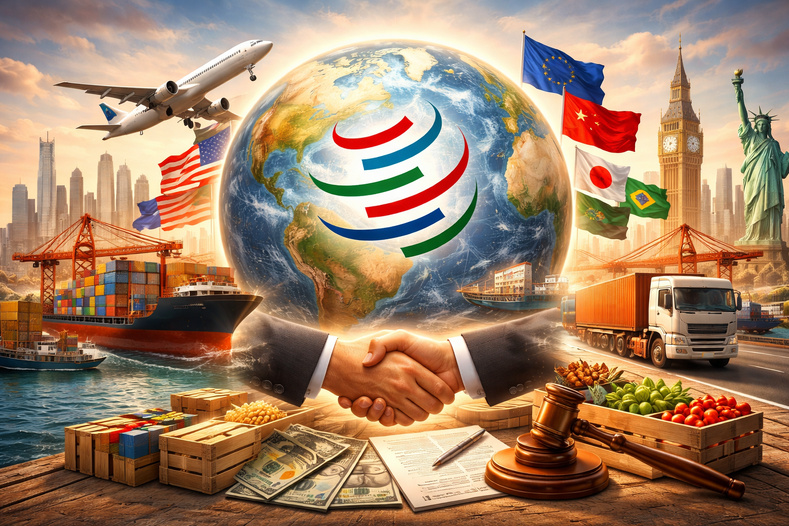
Efforts to reform the global trading system are entering a decisive phase as negotiations at the World Trade Organization (WTO) move closer to a structured roadmap, even as sharp divisions between the United States and India over digital trade taxation continue to test the institution’s ability to adapt. The convergence of reform discussions with disagreements over e-commerce rules reflects a deeper transformation underway in global trade governance, where digitalisation, sovereignty, and development priorities are increasingly intersecting.
At the centre of the negotiations lies a fundamental question: how should the WTO evolve to remain relevant in an era defined by digital commerce, geopolitical fragmentation, and shifting economic power balances. The ongoing talks indicate that members are not only attempting to resolve immediate policy disputes but also grappling with systemic issues that have long constrained the organisation’s effectiveness.
Reform Momentum Builds Around Structural Inefficiencies
The emerging reform roadmap reflects growing recognition among member states that the WTO’s existing framework struggles to address contemporary trade realities. The organisation’s consensus-based decision-making process, once seen as a guarantor of inclusivity, has increasingly become a source of paralysis. A single country’s objection can stall agreements, delaying responses to rapidly evolving global challenges.
Negotiators are therefore focusing on mechanisms to streamline decision-making without undermining the principle of inclusivity. Proposals under discussion include flexible negotiating structures, time-bound processes, and clearer differentiation between developed and developing members. These changes are aimed at preventing prolonged deadlocks while ensuring that smaller economies retain a voice in the system.
Transparency in subsidy practices has also emerged as a key pillar of reform. Advanced economies have raised concerns about opaque industrial policies, particularly in large emerging markets, arguing that they distort competition and undermine fair trade. Addressing these concerns requires not only updated rules but also stronger compliance mechanisms, an area where the WTO has historically faced limitations.
The reform discussions also extend to dispute settlement, another critical area where the WTO’s credibility has been challenged. The weakening of the appellate body has left a gap in enforcement, reducing the organisation’s ability to resolve trade conflicts effectively. Restoring a functional dispute resolution system is widely seen as essential to rebuilding trust among members.
Digital Trade Dispute Reflects Deeper Economic Divide
Running parallel to the reform agenda is the contentious issue of the e-commerce moratorium, which prohibits countries from imposing customs duties on electronic transmissions such as software downloads, digital media, and data flows. Originally introduced to encourage the growth of digital trade, the moratorium has become a focal point of disagreement between developed and developing economies.
The United States and several advanced economies view the extension of the moratorium as critical to maintaining a predictable and open digital trade environment. For them, the absence of such a framework could lead to fragmented regulations, increased costs, and barriers to innovation. A permanent or long-term extension is therefore seen as essential to sustaining the global digital economy.
India, however, has adopted a more cautious stance, reflecting concerns shared by many developing countries. The rapid expansion of digital trade has shifted significant economic activity into domains that are difficult to tax under existing frameworks. For countries with large consumer markets but relatively smaller digital production bases, this raises questions about revenue loss and economic sovereignty.
India’s position underscores a broader structural issue: the distribution of benefits from digital trade is uneven. While developed economies often dominate in technology and digital services, developing countries risk becoming primarily consumption-driven markets. The ability to impose duties on digital transactions is therefore viewed as a potential tool to rebalance this dynamic.
Negotiation Dynamics and the Search for Compromise
The ongoing negotiations suggest that a compromise on the e-commerce moratorium may be possible, though the contours of such an agreement remain fluid. Proposals range from short-term extensions with built-in review mechanisms to longer-term arrangements that include safeguards for developing countries.
One emerging approach involves linking the extension of the moratorium to commitments on capacity building and technical assistance. By supporting developing economies in enhancing their digital infrastructure and regulatory frameworks, proponents argue that the benefits of digital trade can be more evenly distributed.
Another aspect under consideration is the inclusion of review clauses that allow members to reassess the impact of the moratorium over time. This would provide flexibility for countries concerned about revenue implications while maintaining a degree of stability for businesses operating in the digital space.
The outcome of these negotiations carries significant implications for the WTO’s reform agenda. For the United States, progress on digital trade is closely tied to its broader support for the organisation. Without movement on this front, there is a risk that Washington may further disengage from multilateral trade processes, weakening the institution’s influence.
Plurilateral Agreements and Institutional Tensions
A related point of contention in the reform discussions is the role of plurilateral agreements—deals negotiated among a subset of WTO members rather than the entire membership. Proponents argue that such agreements offer a pragmatic way to advance rules in areas where consensus is difficult to achieve. Critics, including India, caution that they may erode the principle of multilateralism by creating parallel frameworks that exclude certain countries.
This debate highlights a fundamental tension within the WTO: balancing the need for progress with the commitment to inclusivity. As trade issues become more complex and diverse, achieving universal agreement on every aspect becomes increasingly challenging. Plurilateral initiatives may therefore represent a necessary compromise, though their integration into the broader WTO framework remains a sensitive issue.
The investment facilitation agreement, aimed at improving conditions for foreign investment in developing countries, exemplifies this dynamic. While supported by many members, its incorporation into WTO rules has faced resistance, reflecting concerns about governance and equity.
Geopolitical Pressures and the Urgency of Reform
The urgency of WTO reform is amplified by the broader geopolitical environment. Trade tensions, supply chain disruptions, and the rise of economic nationalism have all contributed to a more fragmented global trading system. In this context, the WTO’s ability to provide a stable and predictable framework becomes increasingly important.
The intersection of trade policy with geopolitical considerations is particularly evident in the digital domain. Control over data flows, digital infrastructure, and technological standards has become a strategic priority for many countries. This adds a layer of complexity to negotiations, as economic and security interests become intertwined.
At the same time, external shocks such as conflicts and energy disruptions have highlighted the interconnected nature of global trade. These developments reinforce the need for a resilient multilateral system capable of adapting to changing circumstances.
Balancing Reform Ambitions with Political Realities
As negotiations continue, the path forward for WTO reform will depend on the ability of members to reconcile competing priorities. The e-commerce moratorium serves as a microcosm of the broader challenges facing the organisation: balancing innovation with equity, openness with sovereignty, and efficiency with inclusivity.
The emerging reform roadmap represents a step toward addressing these challenges, but its success will ultimately hinge on implementation. Translating agreed principles into actionable policies requires sustained political will and cooperation among members with diverse interests.
In this evolving landscape, the WTO’s future will be shaped not only by the outcomes of specific negotiations but also by its capacity to adapt to a rapidly changing global economy. The interplay between reform efforts and digital trade disputes will remain a defining feature of this process, influencing the direction of international trade governance for years to come.
(Source:www.tradingview.com)
At the centre of the negotiations lies a fundamental question: how should the WTO evolve to remain relevant in an era defined by digital commerce, geopolitical fragmentation, and shifting economic power balances. The ongoing talks indicate that members are not only attempting to resolve immediate policy disputes but also grappling with systemic issues that have long constrained the organisation’s effectiveness.
Reform Momentum Builds Around Structural Inefficiencies
The emerging reform roadmap reflects growing recognition among member states that the WTO’s existing framework struggles to address contemporary trade realities. The organisation’s consensus-based decision-making process, once seen as a guarantor of inclusivity, has increasingly become a source of paralysis. A single country’s objection can stall agreements, delaying responses to rapidly evolving global challenges.
Negotiators are therefore focusing on mechanisms to streamline decision-making without undermining the principle of inclusivity. Proposals under discussion include flexible negotiating structures, time-bound processes, and clearer differentiation between developed and developing members. These changes are aimed at preventing prolonged deadlocks while ensuring that smaller economies retain a voice in the system.
Transparency in subsidy practices has also emerged as a key pillar of reform. Advanced economies have raised concerns about opaque industrial policies, particularly in large emerging markets, arguing that they distort competition and undermine fair trade. Addressing these concerns requires not only updated rules but also stronger compliance mechanisms, an area where the WTO has historically faced limitations.
The reform discussions also extend to dispute settlement, another critical area where the WTO’s credibility has been challenged. The weakening of the appellate body has left a gap in enforcement, reducing the organisation’s ability to resolve trade conflicts effectively. Restoring a functional dispute resolution system is widely seen as essential to rebuilding trust among members.
Digital Trade Dispute Reflects Deeper Economic Divide
Running parallel to the reform agenda is the contentious issue of the e-commerce moratorium, which prohibits countries from imposing customs duties on electronic transmissions such as software downloads, digital media, and data flows. Originally introduced to encourage the growth of digital trade, the moratorium has become a focal point of disagreement between developed and developing economies.
The United States and several advanced economies view the extension of the moratorium as critical to maintaining a predictable and open digital trade environment. For them, the absence of such a framework could lead to fragmented regulations, increased costs, and barriers to innovation. A permanent or long-term extension is therefore seen as essential to sustaining the global digital economy.
India, however, has adopted a more cautious stance, reflecting concerns shared by many developing countries. The rapid expansion of digital trade has shifted significant economic activity into domains that are difficult to tax under existing frameworks. For countries with large consumer markets but relatively smaller digital production bases, this raises questions about revenue loss and economic sovereignty.
India’s position underscores a broader structural issue: the distribution of benefits from digital trade is uneven. While developed economies often dominate in technology and digital services, developing countries risk becoming primarily consumption-driven markets. The ability to impose duties on digital transactions is therefore viewed as a potential tool to rebalance this dynamic.
Negotiation Dynamics and the Search for Compromise
The ongoing negotiations suggest that a compromise on the e-commerce moratorium may be possible, though the contours of such an agreement remain fluid. Proposals range from short-term extensions with built-in review mechanisms to longer-term arrangements that include safeguards for developing countries.
One emerging approach involves linking the extension of the moratorium to commitments on capacity building and technical assistance. By supporting developing economies in enhancing their digital infrastructure and regulatory frameworks, proponents argue that the benefits of digital trade can be more evenly distributed.
Another aspect under consideration is the inclusion of review clauses that allow members to reassess the impact of the moratorium over time. This would provide flexibility for countries concerned about revenue implications while maintaining a degree of stability for businesses operating in the digital space.
The outcome of these negotiations carries significant implications for the WTO’s reform agenda. For the United States, progress on digital trade is closely tied to its broader support for the organisation. Without movement on this front, there is a risk that Washington may further disengage from multilateral trade processes, weakening the institution’s influence.
Plurilateral Agreements and Institutional Tensions
A related point of contention in the reform discussions is the role of plurilateral agreements—deals negotiated among a subset of WTO members rather than the entire membership. Proponents argue that such agreements offer a pragmatic way to advance rules in areas where consensus is difficult to achieve. Critics, including India, caution that they may erode the principle of multilateralism by creating parallel frameworks that exclude certain countries.
This debate highlights a fundamental tension within the WTO: balancing the need for progress with the commitment to inclusivity. As trade issues become more complex and diverse, achieving universal agreement on every aspect becomes increasingly challenging. Plurilateral initiatives may therefore represent a necessary compromise, though their integration into the broader WTO framework remains a sensitive issue.
The investment facilitation agreement, aimed at improving conditions for foreign investment in developing countries, exemplifies this dynamic. While supported by many members, its incorporation into WTO rules has faced resistance, reflecting concerns about governance and equity.
Geopolitical Pressures and the Urgency of Reform
The urgency of WTO reform is amplified by the broader geopolitical environment. Trade tensions, supply chain disruptions, and the rise of economic nationalism have all contributed to a more fragmented global trading system. In this context, the WTO’s ability to provide a stable and predictable framework becomes increasingly important.
The intersection of trade policy with geopolitical considerations is particularly evident in the digital domain. Control over data flows, digital infrastructure, and technological standards has become a strategic priority for many countries. This adds a layer of complexity to negotiations, as economic and security interests become intertwined.
At the same time, external shocks such as conflicts and energy disruptions have highlighted the interconnected nature of global trade. These developments reinforce the need for a resilient multilateral system capable of adapting to changing circumstances.
Balancing Reform Ambitions with Political Realities
As negotiations continue, the path forward for WTO reform will depend on the ability of members to reconcile competing priorities. The e-commerce moratorium serves as a microcosm of the broader challenges facing the organisation: balancing innovation with equity, openness with sovereignty, and efficiency with inclusivity.
The emerging reform roadmap represents a step toward addressing these challenges, but its success will ultimately hinge on implementation. Translating agreed principles into actionable policies requires sustained political will and cooperation among members with diverse interests.
In this evolving landscape, the WTO’s future will be shaped not only by the outcomes of specific negotiations but also by its capacity to adapt to a rapidly changing global economy. The interplay between reform efforts and digital trade disputes will remain a defining feature of this process, influencing the direction of international trade governance for years to come.
(Source:www.tradingview.com)
 Homepage
 Send to a friend
 Printable version
 Share
Share


