


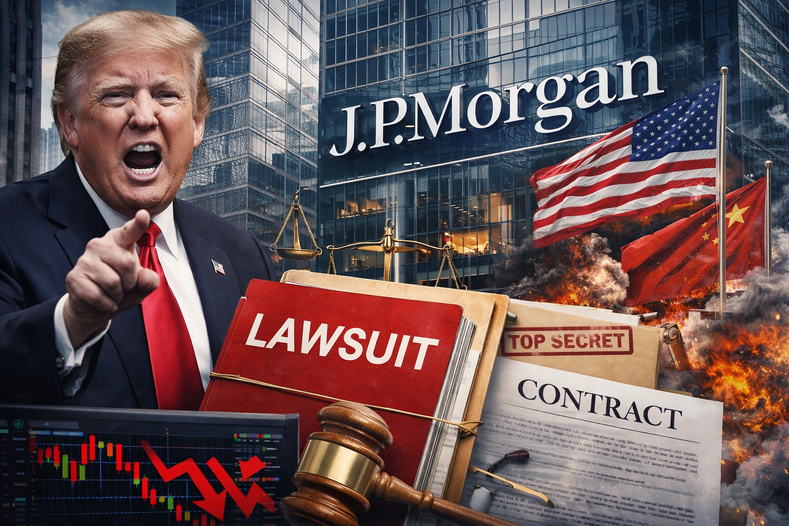
When U.S. President Donald Trump moved to sue JPMorgan Chase for closing his business accounts, the legal fight immediately raised questions far larger than a single banking relationship. At its core, the case sits at the intersection of private contract law, political discrimination claims, regulatory risk management and the growing tension between financial institutions and politically exposed clients. Whether Trump ultimately prevails will depend less on the size of the damages claimed and more on how courts interpret the boundary between lawful banking discretion and impermissible political retaliation.
The dispute reaches back to the weeks following the January 6, 2021 attack on the U.S. Capitol, a moment when banks, insurers and payment processors across the United States reassessed relationships that could expose them to regulatory, reputational or compliance risk. Against that backdrop, JPMorgan’s decision to terminate accounts linked to Trump businesses became part of a broader de-risking trend, even as Trump now argues that his treatment crossed into unlawful conduct.
Account Closures and the Limits of Banking Discretion
Banks in the United States operate under contracts that typically grant them wide latitude to terminate customer relationships with little explanation. These agreements are shaped by the industry’s regulatory environment, which requires constant monitoring of customers for legal, financial and reputational risks. From money laundering and sanctions exposure to fraud and public controversy, banks are expected to err on the side of caution.
Trump’s lawsuit challenges that discretion by asserting that JPMorgan’s decision was not rooted in neutral risk management, but in political animus. According to the complaint, Trump’s accounts had been in good standing and were closed after decades-long relationships, following public criticism of his political positions and actions. The timing, Trump argues, supports an inference that the closures were politically motivated rather than operationally necessary.
For JPMorgan, the defence rests on a well-established principle: private banks are not public utilities. They are generally free to choose whom they do business with, provided decisions are not based on prohibited forms of discrimination or unlawful conduct. The bank maintains that account closures were driven by risk considerations and denies any political motivation.
Political Viewpoint as a Legal Fault Line
A central challenge for Trump’s case is demonstrating that political viewpoint constitutes an impermissible basis for terminating a banking relationship under applicable law. Courts have historically recognised protections against discrimination based on race, religion, ethnicity and other protected characteristics. Political belief, however, occupies a more ambiguous space in private commercial relationships.
Trump’s legal team is expected to argue that terminating accounts solely because of political views violates principles of good faith and fair dealing, particularly under Florida’s unfair trade practices framework. The argument hinges on whether political retaliation can be framed as bad faith conduct rather than a permissible exercise of contractual rights.
JPMorgan, by contrast, is likely to argue that political views cannot be disentangled from reputational and regulatory risk. From the bank’s perspective, public controversies associated with a client—especially one as prominent as a sitting or former president—can materially affect risk exposure even if no illegal activity is alleged. If courts accept that rationale, it would significantly weaken Trump’s claim.
The most contentious element of Trump’s lawsuit is the allegation that JPMorgan created or circulated a “blacklist” warning other banks against doing business with him, his family or the Trump Organization. Trump argues that such a list is typically reserved for clients engaged in wrongdoing and that its alleged use amounted to false and damaging disparagement.
Trade libel claims, however, are notoriously difficult to sustain. They usually require proof that false statements were made to third parties, that those statements were malicious or reckless, and that they caused specific economic harm. Unlike traditional trade libel cases involving competing businesses, Trump’s claim does not allege that JPMorgan stood to gain competitively from disparaging him.
The bank has denied the existence of any such blacklist. Even if Trump establishes that internal or external warnings existed, he would still need to prove that JPMorgan communicated false assertions of misconduct rather than routine risk assessments. Courts tend to treat internal compliance flags and confidential risk communications as protected, particularly in heavily regulated industries.
Regulatory Context and the De-Risking Imperative
Any assessment of the case must account for the regulatory pressures facing large banks. Financial institutions are subject to intense scrutiny from federal regulators, and failures to manage risk can result in severe penalties. Following January 2021, many banks reassessed politically exposed persons not because of ideology, but because of heightened scrutiny from regulators, investors and the public.
From this perspective, JPMorgan’s actions can be framed as part of a systemic response rather than a targeted political decision. If the bank demonstrates that similar reviews were conducted across a range of high-risk or controversial clients, it strengthens the argument that Trump was not singled out for his views.
Trump’s legal strategy may counter that argument by emphasising his electoral support and mainstream political status, asserting that his views cannot reasonably be characterised as extreme or outside the political norm. This line of reasoning seeks to undermine claims that reputational risk alone justified the termination.
The case’s procedural trajectory may prove as consequential as its substantive merits. JPMorgan is likely to seek removal to federal court, a forum often viewed as more predictable for complex commercial disputes involving national institutions. Federal judges, appointed rather than elected, may be less susceptible to local political pressures.
An early motion to dismiss is also probable. At that stage, the court would assess whether Trump’s allegations plausibly establish unlawful conduct, without weighing evidence. If the case is dismissed, it would reinforce banks’ broad discretion. If it survives, JPMorgan could face discovery obligations that expose internal communications and decision-making processes, increasing litigation risk.
Settlement Pressure and Strategic Calculations
Large banks are often reluctant to litigate politically charged cases through trial, particularly when regulatory relationships are at stake. Even if JPMorgan believes its legal position is strong, prolonged litigation could invite reputational damage or regulatory distraction.
Trump’s demand for $5 billion in damages sets a high bar, but settlement discussions would likely focus on narrower compensation tied to business disruption rather than punitive recovery. Trump has argued that account closures forced him to rely on smaller banks, creating operational inefficiencies and reputational harm.
For Trump, the lawsuit also serves a strategic purpose beyond damages. It reinforces a broader narrative about political bias within corporate America and positions financial institutions as actors in cultural and ideological conflicts. For JPMorgan, the stakes extend beyond this case to the precedent it may set for how banks manage politically exposed clients.
Regardless of outcome, the lawsuit highlights a growing tension between political power and private financial infrastructure. As banks play an increasingly central role in economic life, decisions once viewed as routine business judgments are now scrutinised for ideological implications.
If courts narrow banks’ discretion in cases involving political figures, financial institutions may face pressure to justify decisions that were previously unquestioned. If JPMorgan prevails decisively, it will reaffirm the principle that banks may prioritise risk management even when decisions have political consequences.
The case thus transcends Trump and JPMorgan. It tests whether private financial institutions can remain neutral risk managers in an era of polarisation, or whether their decisions will increasingly be interpreted—and litigated—as political acts.
(Source:www.reuters.com)
The dispute reaches back to the weeks following the January 6, 2021 attack on the U.S. Capitol, a moment when banks, insurers and payment processors across the United States reassessed relationships that could expose them to regulatory, reputational or compliance risk. Against that backdrop, JPMorgan’s decision to terminate accounts linked to Trump businesses became part of a broader de-risking trend, even as Trump now argues that his treatment crossed into unlawful conduct.
Account Closures and the Limits of Banking Discretion
Banks in the United States operate under contracts that typically grant them wide latitude to terminate customer relationships with little explanation. These agreements are shaped by the industry’s regulatory environment, which requires constant monitoring of customers for legal, financial and reputational risks. From money laundering and sanctions exposure to fraud and public controversy, banks are expected to err on the side of caution.
Trump’s lawsuit challenges that discretion by asserting that JPMorgan’s decision was not rooted in neutral risk management, but in political animus. According to the complaint, Trump’s accounts had been in good standing and were closed after decades-long relationships, following public criticism of his political positions and actions. The timing, Trump argues, supports an inference that the closures were politically motivated rather than operationally necessary.
For JPMorgan, the defence rests on a well-established principle: private banks are not public utilities. They are generally free to choose whom they do business with, provided decisions are not based on prohibited forms of discrimination or unlawful conduct. The bank maintains that account closures were driven by risk considerations and denies any political motivation.
Political Viewpoint as a Legal Fault Line
A central challenge for Trump’s case is demonstrating that political viewpoint constitutes an impermissible basis for terminating a banking relationship under applicable law. Courts have historically recognised protections against discrimination based on race, religion, ethnicity and other protected characteristics. Political belief, however, occupies a more ambiguous space in private commercial relationships.
Trump’s legal team is expected to argue that terminating accounts solely because of political views violates principles of good faith and fair dealing, particularly under Florida’s unfair trade practices framework. The argument hinges on whether political retaliation can be framed as bad faith conduct rather than a permissible exercise of contractual rights.
JPMorgan, by contrast, is likely to argue that political views cannot be disentangled from reputational and regulatory risk. From the bank’s perspective, public controversies associated with a client—especially one as prominent as a sitting or former president—can materially affect risk exposure even if no illegal activity is alleged. If courts accept that rationale, it would significantly weaken Trump’s claim.
The most contentious element of Trump’s lawsuit is the allegation that JPMorgan created or circulated a “blacklist” warning other banks against doing business with him, his family or the Trump Organization. Trump argues that such a list is typically reserved for clients engaged in wrongdoing and that its alleged use amounted to false and damaging disparagement.
Trade libel claims, however, are notoriously difficult to sustain. They usually require proof that false statements were made to third parties, that those statements were malicious or reckless, and that they caused specific economic harm. Unlike traditional trade libel cases involving competing businesses, Trump’s claim does not allege that JPMorgan stood to gain competitively from disparaging him.
The bank has denied the existence of any such blacklist. Even if Trump establishes that internal or external warnings existed, he would still need to prove that JPMorgan communicated false assertions of misconduct rather than routine risk assessments. Courts tend to treat internal compliance flags and confidential risk communications as protected, particularly in heavily regulated industries.
Regulatory Context and the De-Risking Imperative
Any assessment of the case must account for the regulatory pressures facing large banks. Financial institutions are subject to intense scrutiny from federal regulators, and failures to manage risk can result in severe penalties. Following January 2021, many banks reassessed politically exposed persons not because of ideology, but because of heightened scrutiny from regulators, investors and the public.
From this perspective, JPMorgan’s actions can be framed as part of a systemic response rather than a targeted political decision. If the bank demonstrates that similar reviews were conducted across a range of high-risk or controversial clients, it strengthens the argument that Trump was not singled out for his views.
Trump’s legal strategy may counter that argument by emphasising his electoral support and mainstream political status, asserting that his views cannot reasonably be characterised as extreme or outside the political norm. This line of reasoning seeks to undermine claims that reputational risk alone justified the termination.
The case’s procedural trajectory may prove as consequential as its substantive merits. JPMorgan is likely to seek removal to federal court, a forum often viewed as more predictable for complex commercial disputes involving national institutions. Federal judges, appointed rather than elected, may be less susceptible to local political pressures.
An early motion to dismiss is also probable. At that stage, the court would assess whether Trump’s allegations plausibly establish unlawful conduct, without weighing evidence. If the case is dismissed, it would reinforce banks’ broad discretion. If it survives, JPMorgan could face discovery obligations that expose internal communications and decision-making processes, increasing litigation risk.
Settlement Pressure and Strategic Calculations
Large banks are often reluctant to litigate politically charged cases through trial, particularly when regulatory relationships are at stake. Even if JPMorgan believes its legal position is strong, prolonged litigation could invite reputational damage or regulatory distraction.
Trump’s demand for $5 billion in damages sets a high bar, but settlement discussions would likely focus on narrower compensation tied to business disruption rather than punitive recovery. Trump has argued that account closures forced him to rely on smaller banks, creating operational inefficiencies and reputational harm.
For Trump, the lawsuit also serves a strategic purpose beyond damages. It reinforces a broader narrative about political bias within corporate America and positions financial institutions as actors in cultural and ideological conflicts. For JPMorgan, the stakes extend beyond this case to the precedent it may set for how banks manage politically exposed clients.
Regardless of outcome, the lawsuit highlights a growing tension between political power and private financial infrastructure. As banks play an increasingly central role in economic life, decisions once viewed as routine business judgments are now scrutinised for ideological implications.
If courts narrow banks’ discretion in cases involving political figures, financial institutions may face pressure to justify decisions that were previously unquestioned. If JPMorgan prevails decisively, it will reaffirm the principle that banks may prioritise risk management even when decisions have political consequences.
The case thus transcends Trump and JPMorgan. It tests whether private financial institutions can remain neutral risk managers in an era of polarisation, or whether their decisions will increasingly be interpreted—and litigated—as political acts.
(Source:www.reuters.com)
 Homepage
 Send to a friend
 Printable version
 Share
Share


