


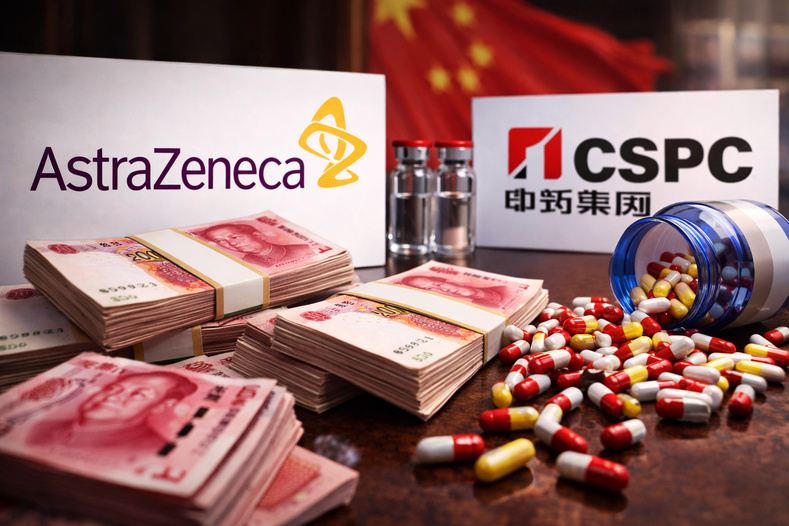
The decision by AstraZeneca to commit up to $18.5 billion to license weight-loss and metabolic drug candidates from CSPC Pharmaceutical Group marks a decisive shift in how Western drugmakers are sourcing innovation in one of the most competitive therapeutic markets in decades. Far from being a routine licensing agreement, the deal reflects a convergence of scientific urgency, geopolitical recalibration, and commercial necessity as the global obesity market reshapes pharmaceutical strategy.
At its core, the agreement underscores AstraZeneca’s recognition that the next wave of breakthroughs in metabolic disease will not be confined to traditional Western research hubs. Instead, it signals growing confidence that China’s drug discovery ecosystem—long seen as manufacturing-centric—is now capable of delivering high-value, globally relevant innovation at scale.
Why obesity has become a strategic priority rather than a portfolio add-on
Obesity has moved rapidly from a chronic public-health challenge to one of the most commercially consequential disease areas in modern medicine. Rising global prevalence, strong links to diabetes and cardiovascular disease, and unprecedented clinical efficacy from newer therapies have transformed weight management into a cornerstone of long-term pharmaceutical growth.
For AstraZeneca, which has historically been strongest in oncology, cardiovascular, and respiratory medicine, obesity represents both an opportunity and a competitive necessity. Rival drugmakers have raced ahead with blockbuster weight-loss treatments, redefining investor expectations around growth, margins, and pipeline credibility. Remaining a peripheral player was no longer viable.
The scale of the CSPC deal reflects this reality. Rather than incremental in-house development, AstraZeneca has opted for accelerated access to multiple candidates, platforms, and technologies in one stroke—an approach consistent with the urgency of catching up in a rapidly consolidating market.
How China fits into AstraZeneca’s long-term innovation model
The agreement cannot be viewed in isolation from AstraZeneca’s broader expansion in China. Over the past decade, the company has steadily deepened its footprint across research, manufacturing, and digital health in the country. What has changed is the nature of that engagement.
Where earlier investments focused on market access and clinical trials, current strategy increasingly centers on upstream innovation. Chinese biotech firms like CSPC now offer not just cost advantages but differentiated science, particularly in areas such as sustained-release formulations, peptide engineering, and artificial-intelligence-driven discovery.
By licensing multiple obesity candidates and collaborating on additional programs, AstraZeneca is effectively embedding itself within China’s next-generation drug development ecosystem. This reduces reliance on a single molecule and instead creates optionality across platforms—an important hedge in a field where clinical attrition remains high.
The logic behind the deal’s unusually large headline value
The headline figure of up to $18.5 billion has drawn attention, but its structure reveals AstraZeneca’s risk calculus. Only a fraction of that sum is paid upfront, with the bulk tied to development, regulatory, and commercial milestones. This aligns incentives while allowing AstraZeneca to scale commitment in step with clinical success.
The deal also spans eight drug programs and platform access, not a single asset. In practical terms, AstraZeneca is buying a portfolio of shots on goal rather than betting on one candidate. This reflects lessons learned across the industry: in obesity drug development, durability, tolerability, and dosing convenience matter as much as headline weight-loss percentages.
One of the licensed candidates is designed for once-monthly dosing, a feature that addresses a critical real-world challenge—patient adherence. If successful, such formulations could differentiate AstraZeneca’s future offerings in a crowded market increasingly defined by marginal gains.
Why CSPC benefits as much strategically as financially
For CSPC, the agreement represents validation as much as monetisation. It is the largest out-licensing deal in the company’s history, elevating its global profile and reinforcing the credibility of Chinese-origin innovation in regulated international markets.
Crucially, CSPC retains exposure to upside through milestone payments and future royalties, allowing it to participate in global success without shouldering the full cost and risk of late-stage development and commercialization. The deal also strengthens CSPC’s internal capabilities by aligning it with a multinational partner experienced in navigating complex regulatory and market landscapes.
The immediate drop in CSPC’s share price following the announcement reflected market mechanics rather than fundamentals. Investors who had anticipated a deal moved quickly to lock in gains, but strategically, the transaction positions CSPC as a repeat player in global licensing rather than a one-off beneficiary.
A defining feature of the AstraZeneca-CSPC agreement is its emphasis on platforms rather than just products. Access to sustained-release delivery systems and AI-driven peptide discovery suggests AstraZeneca is thinking beyond first-generation obesity drugs toward longer-term differentiation.
As competition intensifies, future success will depend on improving patient experience—fewer injections, longer intervals between doses, and reduced side effects. Platform-level collaboration allows AstraZeneca to influence these design choices early, integrating them into its broader R&D strategy.
This approach also aligns with AstraZeneca’s stated ambition to launch 20 new medicines by the end of the decade. Rather than relying solely on internal pipelines, the company is increasingly assembling modular innovation networks that can be recombined across disease areas.
A signal of changing global drug development dynamics
The deal carries implications beyond obesity. It highlights a broader shift in how multinational pharmaceutical companies view China—not merely as a manufacturing base or sales market, but as a source of original science worthy of multibillion-dollar bets.
This evolution is occurring despite geopolitical tensions and regulatory uncertainty. That AstraZeneca is willing to grant a global licence while excluding mainland China reflects careful navigation of jurisdictional boundaries rather than retreat. It allows the company to globalise innovation while respecting local market dynamics.
In effect, the agreement demonstrates that scientific collaboration can advance even as political and economic relations remain complex. For global drug development, that distinction is increasingly important.
Competitive pressure and the urgency of scale
The obesity market’s rapid expansion has created a winner-takes-most dynamic, where early leaders benefit from scale, data, and prescriber familiarity. AstraZeneca’s move can be read as an attempt to compress timelines—acquiring breadth quickly rather than building sequentially.
By securing multiple candidates and technologies in one agreement, the company reduces the risk of being locked out by entrenched competitors. It also sends a signal to investors that obesity is no longer an optional adjacency but a core pillar of future growth.
In that sense, the CSPC deal is less about a single therapy and more about strategic positioning. AstraZeneca is buying relevance in a market that will shape pharmaceutical earnings, healthcare budgets, and public-health outcomes for decades.
What emerges is a picture of a company recalibrating its innovation model to match a new global reality—one where breakthroughs are geographically distributed, competition is unforgiving, and scale matters as much as science.
(Source:www.reuters.com)
At its core, the agreement underscores AstraZeneca’s recognition that the next wave of breakthroughs in metabolic disease will not be confined to traditional Western research hubs. Instead, it signals growing confidence that China’s drug discovery ecosystem—long seen as manufacturing-centric—is now capable of delivering high-value, globally relevant innovation at scale.
Why obesity has become a strategic priority rather than a portfolio add-on
Obesity has moved rapidly from a chronic public-health challenge to one of the most commercially consequential disease areas in modern medicine. Rising global prevalence, strong links to diabetes and cardiovascular disease, and unprecedented clinical efficacy from newer therapies have transformed weight management into a cornerstone of long-term pharmaceutical growth.
For AstraZeneca, which has historically been strongest in oncology, cardiovascular, and respiratory medicine, obesity represents both an opportunity and a competitive necessity. Rival drugmakers have raced ahead with blockbuster weight-loss treatments, redefining investor expectations around growth, margins, and pipeline credibility. Remaining a peripheral player was no longer viable.
The scale of the CSPC deal reflects this reality. Rather than incremental in-house development, AstraZeneca has opted for accelerated access to multiple candidates, platforms, and technologies in one stroke—an approach consistent with the urgency of catching up in a rapidly consolidating market.
How China fits into AstraZeneca’s long-term innovation model
The agreement cannot be viewed in isolation from AstraZeneca’s broader expansion in China. Over the past decade, the company has steadily deepened its footprint across research, manufacturing, and digital health in the country. What has changed is the nature of that engagement.
Where earlier investments focused on market access and clinical trials, current strategy increasingly centers on upstream innovation. Chinese biotech firms like CSPC now offer not just cost advantages but differentiated science, particularly in areas such as sustained-release formulations, peptide engineering, and artificial-intelligence-driven discovery.
By licensing multiple obesity candidates and collaborating on additional programs, AstraZeneca is effectively embedding itself within China’s next-generation drug development ecosystem. This reduces reliance on a single molecule and instead creates optionality across platforms—an important hedge in a field where clinical attrition remains high.
The logic behind the deal’s unusually large headline value
The headline figure of up to $18.5 billion has drawn attention, but its structure reveals AstraZeneca’s risk calculus. Only a fraction of that sum is paid upfront, with the bulk tied to development, regulatory, and commercial milestones. This aligns incentives while allowing AstraZeneca to scale commitment in step with clinical success.
The deal also spans eight drug programs and platform access, not a single asset. In practical terms, AstraZeneca is buying a portfolio of shots on goal rather than betting on one candidate. This reflects lessons learned across the industry: in obesity drug development, durability, tolerability, and dosing convenience matter as much as headline weight-loss percentages.
One of the licensed candidates is designed for once-monthly dosing, a feature that addresses a critical real-world challenge—patient adherence. If successful, such formulations could differentiate AstraZeneca’s future offerings in a crowded market increasingly defined by marginal gains.
Why CSPC benefits as much strategically as financially
For CSPC, the agreement represents validation as much as monetisation. It is the largest out-licensing deal in the company’s history, elevating its global profile and reinforcing the credibility of Chinese-origin innovation in regulated international markets.
Crucially, CSPC retains exposure to upside through milestone payments and future royalties, allowing it to participate in global success without shouldering the full cost and risk of late-stage development and commercialization. The deal also strengthens CSPC’s internal capabilities by aligning it with a multinational partner experienced in navigating complex regulatory and market landscapes.
The immediate drop in CSPC’s share price following the announcement reflected market mechanics rather than fundamentals. Investors who had anticipated a deal moved quickly to lock in gains, but strategically, the transaction positions CSPC as a repeat player in global licensing rather than a one-off beneficiary.
A defining feature of the AstraZeneca-CSPC agreement is its emphasis on platforms rather than just products. Access to sustained-release delivery systems and AI-driven peptide discovery suggests AstraZeneca is thinking beyond first-generation obesity drugs toward longer-term differentiation.
As competition intensifies, future success will depend on improving patient experience—fewer injections, longer intervals between doses, and reduced side effects. Platform-level collaboration allows AstraZeneca to influence these design choices early, integrating them into its broader R&D strategy.
This approach also aligns with AstraZeneca’s stated ambition to launch 20 new medicines by the end of the decade. Rather than relying solely on internal pipelines, the company is increasingly assembling modular innovation networks that can be recombined across disease areas.
A signal of changing global drug development dynamics
The deal carries implications beyond obesity. It highlights a broader shift in how multinational pharmaceutical companies view China—not merely as a manufacturing base or sales market, but as a source of original science worthy of multibillion-dollar bets.
This evolution is occurring despite geopolitical tensions and regulatory uncertainty. That AstraZeneca is willing to grant a global licence while excluding mainland China reflects careful navigation of jurisdictional boundaries rather than retreat. It allows the company to globalise innovation while respecting local market dynamics.
In effect, the agreement demonstrates that scientific collaboration can advance even as political and economic relations remain complex. For global drug development, that distinction is increasingly important.
Competitive pressure and the urgency of scale
The obesity market’s rapid expansion has created a winner-takes-most dynamic, where early leaders benefit from scale, data, and prescriber familiarity. AstraZeneca’s move can be read as an attempt to compress timelines—acquiring breadth quickly rather than building sequentially.
By securing multiple candidates and technologies in one agreement, the company reduces the risk of being locked out by entrenched competitors. It also sends a signal to investors that obesity is no longer an optional adjacency but a core pillar of future growth.
In that sense, the CSPC deal is less about a single therapy and more about strategic positioning. AstraZeneca is buying relevance in a market that will shape pharmaceutical earnings, healthcare budgets, and public-health outcomes for decades.
What emerges is a picture of a company recalibrating its innovation model to match a new global reality—one where breakthroughs are geographically distributed, competition is unforgiving, and scale matters as much as science.
(Source:www.reuters.com)
 Homepage
 Send to a friend
 Printable version
 Share
Share


