


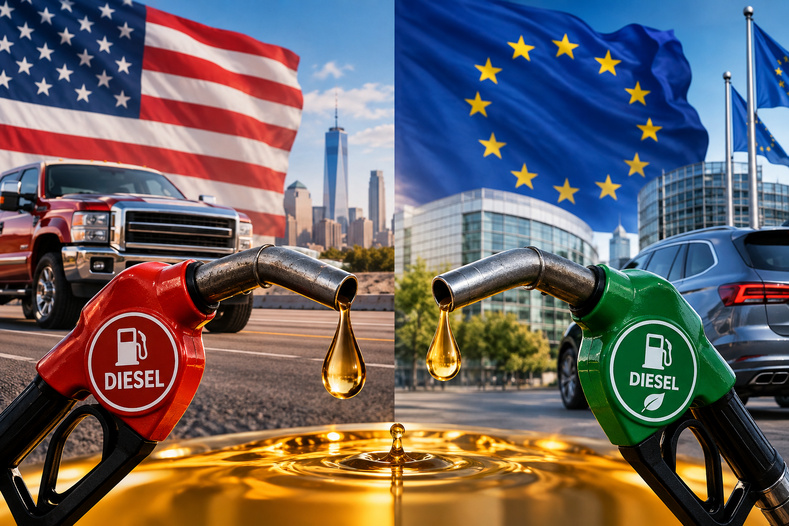
The dispute over diesel reserves between the United States and European governments demonstrates how an energy shortage can quickly become a question of international bargaining power. Washington has urged France and Germany to release emergency diesel stocks to help ease fuel prices, while warning that the United States could restrict diesel exports if European governments do not cooperate. The confrontation shows how closely linked American and European energy markets have become and how difficult it is to separate domestic fuel policy from international supply security.
The United States administration has asked European governments to draw down emergency stocks, with discussions reportedly involving a much broader European release. The pressure comes as diesel prices remain elevated and concerns persist about supply disruptions linked to geopolitical conflict. European governments, meanwhile, have their own reasons for protecting emergency reserves because the coming months could bring additional energy demand and further supply uncertainty.
The dispute is therefore not simply about whether Europe possesses enough diesel. It is about who should bear the cost of stabilizing an interconnected market.
Why Diesel Has Become So Sensitive
Diesel is central to economic activity because it powers freight transport, agricultural machinery, construction equipment and industrial vehicles. A sustained increase in diesel prices can therefore spread through supply chains much more broadly than a rise in the price of a discretionary consumer product.
Higher diesel prices raise transportation costs, which can increase the price of food and manufactured goods. Businesses that rely heavily on fuel may face lower margins or pass higher costs to customers. Governments can also come under pressure to intervene when fuel prices become politically difficult.
The current situation is particularly sensitive because geopolitical conflicts have disrupted traditional energy flows. Europe has already reduced its dependence on Russian energy supplies, increasing the importance of alternative suppliers. The United States has become a major supplier of refined fuel to Europe, creating a relationship in which restrictions on American exports can have significant European consequences.
That interdependence is now at the center of the dispute.
Strategic Reserves Exist For A Reason
Emergency fuel reserves are designed to protect countries against severe supply disruptions. Releasing them can increase short-term supply and reduce pressure on prices, but it also reduces the buffer available if another crisis occurs.
European governments therefore face a difficult calculation. Drawing down reserves could help stabilize the market immediately, but governments must consider how quickly those stocks can be replenished and what other disruptions might occur during the coming winter.
The United States is effectively asking Europe to use part of its safety margin to support broader market stability. From Washington's perspective, additional European supply could reduce international competition for American diesel and potentially lower prices. From Europe's perspective, however, maintaining reserves is part of national and regional energy security.
This difference in priorities explains why the negotiations have become politically sensitive.
A restriction on American diesel exports could potentially increase domestic availability, but it would not be cost-free. United States refineries produce several petroleum products simultaneously, meaning that changes in diesel production can affect gasoline and other fuels as well.
If storage capacity becomes constrained, refineries could face pressure to reduce production. That could eventually affect other fuel markets. Analysts have therefore warned that an export restriction might provide temporary relief but create new distortions if maintained for too long.
This is why the threat itself may be more important than the eventual implementation of a full ban. Washington can use the possibility of restrictions as leverage to encourage other countries to release supplies without actually imposing the measure.
But the strategy also carries risks. European governments may become less willing to depend on American fuel if they believe exports could be restricted for domestic political reasons. That could encourage greater diversification of supply and accelerate investment in alternative energy sources.
Europe Has A Difficult Winter Calculation
The European position is complicated by the region's broader energy vulnerability. Fuel demand typically rises as colder weather approaches, while geopolitical uncertainty remains high. Governments must therefore decide how much inventory is sufficient to address normal seasonal requirements and how much should remain untouched for emergencies.
Releasing reserves also requires coordination. Diesel stocks are not distributed evenly across Europe, and national governments have different energy systems and political priorities. A coordinated European response could improve the impact on prices, but reaching agreement over the size and timing of releases is more complicated than announcing a common policy.
This is why discussions among European governments are important. The issue has evolved from a bilateral dispute into a wider European energy-security question.
The diesel confrontation illustrates a broader change in international energy markets. Energy trade creates efficiency during normal conditions, but it also creates vulnerabilities when geopolitical relationships deteriorate.
Europe benefits from access to American refined fuels, while American producers benefit from access to European buyers. Restricting that trade can therefore hurt both sides even when the immediate objective is to lower domestic prices.
The episode also highlights the growing importance of strategic reserves. Governments once treated emergency stocks mainly as insurance against physical shortages. They are increasingly becoming instruments of economic policy and international negotiation.
For Europe, the central challenge is maintaining enough reserves to withstand future disruptions while preventing current shortages from becoming economically damaging. For the United States, the challenge is balancing domestic price concerns against the interests of its major trading partners.
The outcome will depend on how governments weigh immediate price relief against longer-term energy security. The underlying issue is unlikely to disappear with one reserve release or one export decision. As long as geopolitical instability continues to influence fuel supplies, diesel will remain both an economic commodity and a strategic bargaining instrument.
(Source:www.bloomberg.com)
The United States administration has asked European governments to draw down emergency stocks, with discussions reportedly involving a much broader European release. The pressure comes as diesel prices remain elevated and concerns persist about supply disruptions linked to geopolitical conflict. European governments, meanwhile, have their own reasons for protecting emergency reserves because the coming months could bring additional energy demand and further supply uncertainty.
The dispute is therefore not simply about whether Europe possesses enough diesel. It is about who should bear the cost of stabilizing an interconnected market.
Why Diesel Has Become So Sensitive
Diesel is central to economic activity because it powers freight transport, agricultural machinery, construction equipment and industrial vehicles. A sustained increase in diesel prices can therefore spread through supply chains much more broadly than a rise in the price of a discretionary consumer product.
Higher diesel prices raise transportation costs, which can increase the price of food and manufactured goods. Businesses that rely heavily on fuel may face lower margins or pass higher costs to customers. Governments can also come under pressure to intervene when fuel prices become politically difficult.
The current situation is particularly sensitive because geopolitical conflicts have disrupted traditional energy flows. Europe has already reduced its dependence on Russian energy supplies, increasing the importance of alternative suppliers. The United States has become a major supplier of refined fuel to Europe, creating a relationship in which restrictions on American exports can have significant European consequences.
That interdependence is now at the center of the dispute.
Strategic Reserves Exist For A Reason
Emergency fuel reserves are designed to protect countries against severe supply disruptions. Releasing them can increase short-term supply and reduce pressure on prices, but it also reduces the buffer available if another crisis occurs.
European governments therefore face a difficult calculation. Drawing down reserves could help stabilize the market immediately, but governments must consider how quickly those stocks can be replenished and what other disruptions might occur during the coming winter.
The United States is effectively asking Europe to use part of its safety margin to support broader market stability. From Washington's perspective, additional European supply could reduce international competition for American diesel and potentially lower prices. From Europe's perspective, however, maintaining reserves is part of national and regional energy security.
This difference in priorities explains why the negotiations have become politically sensitive.
A restriction on American diesel exports could potentially increase domestic availability, but it would not be cost-free. United States refineries produce several petroleum products simultaneously, meaning that changes in diesel production can affect gasoline and other fuels as well.
If storage capacity becomes constrained, refineries could face pressure to reduce production. That could eventually affect other fuel markets. Analysts have therefore warned that an export restriction might provide temporary relief but create new distortions if maintained for too long.
This is why the threat itself may be more important than the eventual implementation of a full ban. Washington can use the possibility of restrictions as leverage to encourage other countries to release supplies without actually imposing the measure.
But the strategy also carries risks. European governments may become less willing to depend on American fuel if they believe exports could be restricted for domestic political reasons. That could encourage greater diversification of supply and accelerate investment in alternative energy sources.
Europe Has A Difficult Winter Calculation
The European position is complicated by the region's broader energy vulnerability. Fuel demand typically rises as colder weather approaches, while geopolitical uncertainty remains high. Governments must therefore decide how much inventory is sufficient to address normal seasonal requirements and how much should remain untouched for emergencies.
Releasing reserves also requires coordination. Diesel stocks are not distributed evenly across Europe, and national governments have different energy systems and political priorities. A coordinated European response could improve the impact on prices, but reaching agreement over the size and timing of releases is more complicated than announcing a common policy.
This is why discussions among European governments are important. The issue has evolved from a bilateral dispute into a wider European energy-security question.
The diesel confrontation illustrates a broader change in international energy markets. Energy trade creates efficiency during normal conditions, but it also creates vulnerabilities when geopolitical relationships deteriorate.
Europe benefits from access to American refined fuels, while American producers benefit from access to European buyers. Restricting that trade can therefore hurt both sides even when the immediate objective is to lower domestic prices.
The episode also highlights the growing importance of strategic reserves. Governments once treated emergency stocks mainly as insurance against physical shortages. They are increasingly becoming instruments of economic policy and international negotiation.
For Europe, the central challenge is maintaining enough reserves to withstand future disruptions while preventing current shortages from becoming economically damaging. For the United States, the challenge is balancing domestic price concerns against the interests of its major trading partners.
The outcome will depend on how governments weigh immediate price relief against longer-term energy security. The underlying issue is unlikely to disappear with one reserve release or one export decision. As long as geopolitical instability continues to influence fuel supplies, diesel will remain both an economic commodity and a strategic bargaining instrument.
(Source:www.bloomberg.com)
 Homepage
 Send to a friend
 Printable version
 Share
Share


