<?xml version="1.0" encoding="UTF-8"?>
<feed xmlns="http://www.w3.org/2005/Atom"  xmlns:media="http://search.yahoo.com/mrss/" xmlns:dc="http://purl.org/dc/elements/1.1/" xmlns:itunes="http://www.itunes.com/dtds/podcast-1.0.dtd" xmlns:geo="http://www.w3.org/2003/01/geo/wgs84_pos#" xmlns:georss="http://www.georss.org/georss" xmlns:photo="http://www.pheed.com/pheed/">
 <title>Ideals</title>
 <subtitle><![CDATA[Business Essentials for Professionals]]></subtitle>
 <link rel="alternate" type="text/html" href="https://www.ideals.news" />
 <link rel="self" type="text/xml" href="https://www.ideals.news/xml/atom.xml" />
 <id>https://www.ideals.news/</id>
 <updated>2026-06-11T06:11:47+02:00</updated>
 <generator uri="http://www.wmaker.net">Webzine Maker</generator>
  <entry>
   <title>Smart production techniques squeeze the last drops out of older oil wells</title>
   <updated>2016-03-10T05:41:00+01:00</updated>
   <id>https://www.ideals.news/Smart-production-techniques-squeeze-the-last-drops-out-of-older-oil-wells_a77.html</id>
   <category term="Markets" />
   <photo:imgsrc>https://www.ideals.news/photo/art/imagette/9093866-14465468.jpg</photo:imgsrc>
   <published>2016-03-10T05:11:00+01:00</published>
   <author><name>Debashish Mukherjee</name></author>
   <content type="html">
    <![CDATA[
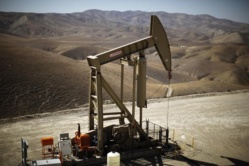
In a market that has been glutted for the last one year, U.S. shale producers have found ways to maximize and optimize the production of oil wells.     <div style="position:relative; float:left; padding-right: 1ex;">
      <img src="https://www.ideals.news/photo/art/default/9093866-14465468.jpg?v=1457584893" alt="Smart production techniques squeeze the last drops out of older oil wells" title="Smart production techniques squeeze the last drops out of older oil wells" />
     </div>
     <div>
      <div style="text-align: justify;">The U.S. shale oil industry is going through an interesting phase, older well which should normally gush out their contents before petering out are not being made to functioning in this particular way. <br />  &nbsp; <br />  Industry experts and analysts are of the opinion that a smart few drillers are subtly flattening the "production curve" of shale wells, by adopting measures that either limit the initial surge or by squeezing a few additional barrels out of older well. <br />  &nbsp; <br />  These measure offer differing benefits. <br />  &nbsp; <br />  While maximizing the last drops of an older well is a lot more economical way to increase volume and immediate revenues by capitalizing on existing investment, while by choking the output of the newly fracked well, drillers hope to ride out the current fall in prices in hopes for higher prices in the future. <br />  &nbsp; <br />  Baker Hughes Inc., the third largest shale oil producer in the U.S., has cited its artificial lift business as "one notable exception" to a sector-wide slump in its latest quarter, which grew by 4% while other revenues from shale oil fell by 10%. <br />  &nbsp; <br />  "Companies still want to grow production, they want to generate cash," said Wade Welborn, vice president of artificial lift at Baker Hughes whose business expertise offers "a means to increase that cash flow." <br />  &nbsp; <br />  This flattening of the production curve for the U.S. shale market will mean the long anticipated drop off of U.S. shale will be more tempered than previously anticipated. It will naturally impede the ongoing process of correcting the glut in the global oil market. <br />  &nbsp; <br />  "Production optimization is going to be the next phase of the shale revolution. The low price environment will give companies and operators a chance to take stock of the techniques that work," said Andrew Slaughter, director for the Deloitte Center for Energy Solutions. <br />  &nbsp; <br />  Last year when crude oil prices began their downward journey, many analysts had expected U.S. shale productions, which has significantly contributed to the global glut, to follow suit. <br />  &nbsp; <br />  Producers such as Whiting Petroleum Corp and Continental Resources Inc. have cut down on almost all of their spending and in some instances they have even left unfinished wells in their work-in-progress state, in hopes of conserving cash while waiting for a sustained turnaround in prices. <br />  &nbsp; <br />  However this long anticipated turning point has yet to emerge thanks to shale oil producers having a couple of more tricks up their sleeve.</div>  
     </div>
     <br style="clear:both;"/>
    ]]>
   </content>
   <link rel="alternate" href="https://www.ideals.news/Smart-production-techniques-squeeze-the-last-drops-out-of-older-oil-wells_a77.html" />
  </entry>
  <entry>
   <title>Brent Crude holds the line at $40 a barrel</title>
   <updated>2016-03-08T14:55:00+01:00</updated>
   <id>https://www.ideals.news/Brent-Crude-holds-the-line-at-40-a-barrel_a60.html</id>
   <category term="Markets" />
   <photo:imgsrc>https://www.ideals.news/photo/art/imagette/9083686-14445473.jpg</photo:imgsrc>
   <published>2016-03-08T14:52:00+01:00</published>
   <author><name>Debashish Mukherjee</name></author>
   <content type="html">
    <![CDATA[
Although investors and traders are looking at $50 a barrel, towards the end of 2016, U.S. shale oil producers have warned that they will come back if oil prices hit $40 a barrel.     <div style="position:relative; float:left; padding-right: 1ex;">
      <img src="https://www.ideals.news/photo/art/default/9083686-14445473.jpg?v=1457445326" alt="Brent Crude holds the line at $40 a barrel" title="Brent Crude holds the line at $40 a barrel" />
     </div>
     <div>
      <div style="text-align: justify;">Weak Chinese trading data has yet again caused oil prices to slide with Brent crude, the only exception, still holding onto the $40 a barrel price tag. This is despite producer’s announcement of talks to bring about a mechanism to support market prices and investors betting on a bull ride. <br />  &nbsp; <br />  Despite being down by 52 cents from its previous settlement, Brent crude futures LOC1c1 managed to defend its position at $40.32 on 0359 GMT. Yesterday, oil contracts had surged by more than 5.5% during intra-day trading thus gaining 49% from its January 20 low. <br />  &nbsp; <br />  However, U.S. West Texas Intermediate (WTI) crude futures were seen trading down by 42 cents at $37.48 a barrel from their previous close. WTI crude futures have also appreciated by 45% from the February 11 low. <br />  &nbsp; <br />  As per available data, crude imports by China has risen by 19.1% during the period of January to February to 31.80 million tonnes, which amounts to nearly 8 million barrels per day. <br />  &nbsp; <br />  "Higher 'teapot' (independent refinery) demand and stronger refining margins which encouraged higher refinery throughputs have contributed to increased imports. Falling domestic crude production is also supportive," said Virendra Chauhan of Energy Aspects in Singapore. <br />  &nbsp; <br />  Despite rising consumption and strong demands, questions are being raised as to whether this pattern of consumption can be sustained in view of the weakening Chinese economic activity. China’s exports have plummeted by a quarter last month, its worst since 2009. <br />  &nbsp; <br />  As per available data from the China Passenger Car Association, vehicles sales in China, which is a key driver for its domestic demand, have fallen by 3.7% to 1.37 million. <br />  &nbsp; <br />  "This is really a poor start for trade this year," said Zhang Yongjun, senior economist at the China Center for International Economic Exchanges. <br />  &nbsp; <br />  <strong>The tussle of Bulls or Bears</strong> <br />  Although crude oil prices marching steadily downwards from the 2015, they have however gained significant traction this year. Last Week Russia’s energy Minister disclosed that Organization of Petroleum Exporting Countries (OPEC) and Non-OPEC oil producers are set to meet between March 20 and April 1, to hammer out a plan on freezing oil productions to their previous levels. <br />  &nbsp; <br />  South American producers have also backed this move and have said yesterday that they would convene a meeting to discuss means on supporting oil prices. <br />  &nbsp; <br />  As per Gary Ross, executive chairman PIRA, a New York-based consultancy firm, you can expect oil prices to hover at $50 a barrel by the end of this year. <br />  &nbsp; <br />  "They (OPEC) want $50 oil, this is going to become the new anchor for global oil prices," said Ross. <br />  Factoring in this news, oil traders have now started to cut back on their short positions and have opened up new long positions, which would benefit from higher prices. <br />  &nbsp; <br />  Singapore-based Phillips Futures has taken a more cautious approach. <br />  &nbsp; <br />  "The main change in fundamentals ... comes from the declining U.S. crude production. Besides this change, we do not see other changes to supply as other factors mainly involve talks rather than concrete movements," said the brokerage firm. <br />  &nbsp; <br />  It went on to add, "These talks involve major producers meeting to negotiate a production freeze. However, with the current oversupply issue; a freeze should be barely enough." <br />  &nbsp; <br />  &nbsp;</div>  
     </div>
     <br style="clear:both;"/>
    ]]>
   </content>
   <link rel="alternate" href="https://www.ideals.news/Brent-Crude-holds-the-line-at-40-a-barrel_a60.html" />
  </entry>
</feed>