<?xml version="1.0" encoding="UTF-8"?>
<feed xmlns="http://www.w3.org/2005/Atom"  xmlns:media="http://search.yahoo.com/mrss/" xmlns:dc="http://purl.org/dc/elements/1.1/" xmlns:itunes="http://www.itunes.com/dtds/podcast-1.0.dtd" xmlns:geo="http://www.w3.org/2003/01/geo/wgs84_pos#" xmlns:georss="http://www.georss.org/georss" xmlns:photo="http://www.pheed.com/pheed/">
 <title>Ideals</title>
 <subtitle><![CDATA[Business Essentials for Professionals]]></subtitle>
 <link rel="alternate" type="text/html" href="https://www.ideals.news" />
 <link rel="self" type="text/xml" href="https://www.ideals.news/xml/atom.xml" />
 <id>https://www.ideals.news/</id>
 <updated>2026-08-11T01:52:33+02:00</updated>
 <generator uri="http://www.wmaker.net">Webzine Maker</generator>
  <entry>
   <title>Corporate Finance Leader Duff &amp; Phelps Strengthens In Europe, New EMEA Leader Appointed </title>
   <updated>2017-10-30T10:32:00+01:00</updated>
   <id>https://www.ideals.news/Corporate-Finance-Leader-Duff-Phelps-Strengthens-In-Europe-New-EMEA-Leader-Appointed_a948.html</id>
   <category term="Companies" />
   <photo:imgsrc>https://www.ideals.news/photo/art/imagette/17929438-22267125.jpg</photo:imgsrc>
   <published>2017-10-30T10:23:00+01:00</published>
   <author><name>La Rédaction</name></author>
   <content type="html">
    <![CDATA[
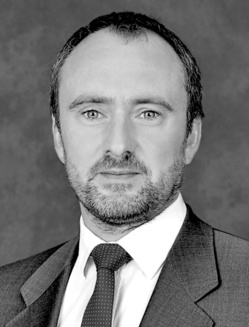
Duff & Phelps, the global leader in valuation services and corporate finance recently appointed Yann Magnan Head of EMEA markets, with the aim of growing the company’s business in Europe. Formerly a Partner at E&Y, Magnan joined Duff & Phelps in 2007 as founder of Paris Office. These days, he manages 26 offices throughout Europe and Middle East. He tells us more about Duff & Phelps’ ambitions.     <div><b>Mr Magnan, you hold a Master’s degree in engineering from the prestigious Ecole Centrale in Paris. How did you come to work in corporate finance, and what does it entail professionally speaking? </b></div>
     <div>
      <span style="font-variant-ligatures: normal; orphans: 2; widows: 2;">I would have to say “chance”, to some extent. I couldn't say that when I was studying in prep school and later at&nbsp;</span><em style="font-variant-ligatures: normal; orphans: 2; widows: 2;">Ecole Centrale</em><span style="font-variant-ligatures: normal; orphans: 2; widows: 2;">, I had this in mind. This being said, working in the business of valuation has a lot to do with being able to embrace rationally very complex questions, situations and systems, with lots of data.&nbsp;</span>
     </div>
     <br style="clear:both;"/>
     <div><b>Can you define the scope of Duff &amp; Phelps’ expertise in corporate finance?</b></div>
     <div>
      Well, we are not only in corporate finance. We are a multi-service global independent financial advisory firm. We advise our clients, be they large corporations, private equity funds, hedge funds, or law firms... in matters that pertain to finance. We did start in corporate finance, 15 years ago, with a focus on M&amp;A and valuation of assets. But since then, we've expanded way outside of this original scope. Today, I would say that most of the services we provide are in the area of financial advising with a focus on good governance, transparency, quality of financial data and transactions.&nbsp;
     </div>
     <br style="clear:both;"/>
     <div><b>Valuation services are the spearhead of your financial expertise – if not in your corporate DNA! - ever since Duff &amp; Phelps initially opened in 1932 to provide investment research… How does that translate into the company’s global expertise, or into your value proposition?</b></div>
     <div>
      Compared to some of our competitors, we could be seen as a source of technical expertise, because that is at the core of what we do. As you said, valuation is in our DNA. But we have a lot more services than just valuation. That was indeed where we started, but we have now expanded into supplying our clients with data analysis. At Duff &amp; Phelps, we are not only able to find the data the client is looking for, but also tell our client what that data truly means.
     </div>
     <br style="clear:both;"/>
     <div><b>Who are your clients, both in Europe and the Middle East? </b></div>
     <div>
      Our clients are typically, on the one hand, very large corporations such as companies listed on the French CAC 40, the German DAX 30 or the English FTSE for example. But we also work with alternative investment funds and smaller organizations, like start-ups and biotech companies. We also work with government organizations sometimes.
     </div>
     <br style="clear:both;"/>
     <div><b>How do you deal with the need to adjust a precise industry expertise to geographical specificities?  </b></div>
     <div style="position:relative; float:right; padding-left: 1ex;">
      <img src="https://www.ideals.news/photo/art/default/17929438-22267125.jpg?v=1509355957" alt="Corporate Finance Leader Duff &amp; Phelps Strengthens In Europe, New EMEA Leader Appointed " title="Corporate Finance Leader Duff &amp; Phelps Strengthens In Europe, New EMEA Leader Appointed " />
     </div>
     <div>
      If we consider the example of large private equity firms, they typically deal with financial issues in various industries. So, when we face this kind of complexity, we gather specific teams for the mission. Let’s take the example of a French client making a deal in Brazil, in the energy industry, who needs financial advice on the right value of the transaction. In this case, the team based in France will run the front office, and coordinate a team with some consultants in Brazil, who know the local environment and its impact on the value of the asset. Now, if our team in Brazil does not specialize in the energy industry, then we will bring in one of our energy experts from Europe or the USA. This is how we make sure we bring the client the right answer, by going further than most firms would. It proceeds from two things: the way our firm is structured, and the culture we promote: working together and going out of our way to articulate the best possible offer for our client.
     </div>
     <br style="clear:both;"/>
     <div><b>You have been personally in charge of valuation services in Europe until now. How do you look back on specific clients’ needs depending on their country, and therefore their national regulations? Is that a real factor of complexity nowadays?</b></div>
     <div>
      Creating value is always complex, and we have to take in a lot of parameters, some of them directly related to the assets, some of them related to how the investors look into the asset, and so on. To get there, methods are well known and used all over the world. But the way these methods are implemented can change from a country to another, or even according to the purpose of the valuation analysis. Germany for example is very prescriptive in standard implementation. Italy's standards not only differ, but they are also less mandatory. And the implementation depends on whether the valuation is intended for financial reporting requirements or transaction requirement, because standards of Value may be different. <br />  &nbsp; <br />  From a transactional point of view, it is also possible to include synergies into the value of the asset, but we have to proceed differently when it comes to an analysis for the applicable accounting framework. There are lots of variables, depending on the purpose of the valuation analysis or the jurisdiction you have to conduct it in. Duff &amp; Phelps precisely excels in managing this complexity. We are able to provide the client with an answer which is really tailored to his needs.
     </div>
     <br style="clear:both;"/>
     <div><b>According to you, does it explain why Duff &amp; Phelps decided to dedicate a self-governing “head office” in EMEA markets, rather than a simple geographical business unit?</b></div>
     <div>
      Yes, that’s clearly part of the equation. There are best practices and methods which vary from one jurisdiction to the other. They would also vary whether you look from a US perspective, or a French one. When I opened the Paris office, in 2007, we were 30 people or so; now, our team has 700 people across Europe. We initially ran valuation services only, and today we deploy 6 service lines across the continent.&nbsp; We grew significantly, added more services, more settlements to the equation. We became established first in the UK, in Netherlands and in France. Now, we operate in Ireland, Italy, Germany, Spain, Portugal, Luxembourg. This became more complex to manage, naturally. It became clear to the firm that having local management to manage that complexity makes sense.&nbsp;
     </div>
     <br style="clear:both;"/>
     <div><b>Yet, in such a "cultural patchwork", how do you put up with the necessity to coordinate the work of 75 managing Directors and 600 consultants across the region? What kind of management do you practice?</b></div>
     <div>
      Our 75 managing directors across Europe are great people, so there’s no need for micro-managing... They perfectly know their markets, and they fully embrace the culture of the firm which relies on cooperation across services. They are true “intrapreneurs”, doing what they have to do to satisfy their clients and create value for them, our employees and the firm. My role is to bring to these people an “extra layer” through coordination and optimization of organizational skills, to make sure we always provide our clients with first-class services. More generally, I pay particular attention to strategic alignment. We have been growing at a solid pace for years, and we expect to continue to grow so - if not faster - especially in Europe. But there is still a lot left to do. It is also part of my role to identify the best way to growth, along with our managing directors.
     </div>
     <br style="clear:both;"/>
     <div><b>So what is your strategic road map for the coming years?</b></div>
     <div>
      The US is still a fairly large share of our business – about 75% of it. But we still have a lot of room to grow in Europe, by leveling European services with American ones. We will do this in a very coordinated way, with our colleagues in the US and Asia. That's the roadmap: opening new markets, developing new services which are synergistic with our existing services.
     </div>
     <br style="clear:both;"/>
    ]]>
   </content>
   <link rel="alternate" href="https://www.ideals.news/Corporate-Finance-Leader-Duff-Phelps-Strengthens-In-Europe-New-EMEA-Leader-Appointed_a948.html" />
  </entry>
  <entry>
   <title>No rookie mistake! 5 Hints for new CFOs</title>
   <updated>2016-09-14T19:07:00+02:00</updated>
   <id>https://www.ideals.news/No-rookie-mistake-5-Hints-for-new-CFOs_a362.html</id>
   <category term="Management" />
   <photo:imgsrc>https://www.ideals.news/photo/art/imagette/10206290-16652934.jpg</photo:imgsrc>
   <published>2016-08-26T19:00:00+02:00</published>
   <author><name>La Rédaction</name></author>
   <content type="html">
    <![CDATA[
The vast majority of respondents in a commercial environment look upon CFO as one of the most influential people in the directorship of any enterprise. Often, he is even seen as the second most influential person. At first glance, it seems that such a position is a tidbit.     <div style="position:relative; text-align : center; padding-bottom: 1em;">
      <img src="https://www.ideals.news/photo/art/default/10206290-16652934.jpg?v=1473872685" alt="No rookie mistake! 5 Hints for new CFOs" title="No rookie mistake! 5 Hints for new CFOs" />
     </div>
     <div>
      Stop jumping to conclusions! There are some pitfalls, which can catch foot of a newcomer. Here are five hints for new CFOs that will help to get your sea legs. <br />   <br />  <strong>1/ Any person, regardless of their professional knowledge and skills, is susceptible to the first-day stress.</strong>&nbsp; <br />   <br />  For most of people, it is very difficult to control oneself and focus on the task under pressure. Oftentimes in such situations, young executives start to solve problems through canned approaches and techniques that are not always discerning. It happens that problems seem insoluble and there is no way out. This is the very point when one may want to drop everything and go away. What is important to bear in mind is that the most difficult move is to resist and find the right way out. CFO must learn to control their thoughts and emotions to reach the end of purpose. <br />   <br />  Lynn Taylor, a national workplace expert and author of "Tame Your Terrible Office Tyrant; How to Manage Childish Boss Behavior and Thrive in Your Job", gives a tip: “<em>Most of us remember our first days at every job because of the heightened pressure to impress. But you can reduce your anxiety by being as meticulous in planning your first day as you were in securing your new position.</em>” <br />   <br />  <strong>2/&nbsp;It is clear that experienced staff have specialized knowledge that cannot always be learned from books, so show humility.</strong> <br />   <br />  For a young CFO, it is extremely important to establish a relationship of trust with the team - remember that their knowledge was obtained precisely in this company, which means that their experience should definitely be taken into account when making decisions. And you all know how easy it is for a new CFO to feel overwhelmed with the workload, or to feel loneliness when the time has come to make important decisions. Do never forget that you will ever take responsibility for the strategic moves you prescribe. <br />   <br />  From this point of view, external savvy advisors and especially corporate consulting firms may help you exercise more discretion in evaluating the relevance of your decisions. Some of them, such as Duff &amp; Phelps, even historically specialize in corporate finance advisory. “<em>We’re not auditors. We are an alternative to some of non-audit services offered by the Big Four</em>” explains Duff &amp; Phelps’ Managing Director Yann Magnan. “<em>Duff &amp; Phelps’ core business is best described by “powering sound decisions”, i.e. giving peace of mind to decision makers who come across engaging decisions on a daily basis.</em>" The company mainly advises C-level executives and board members. Its primary service areas are valuation services, dispute consulting,&nbsp;<a class="link" href="https://en.wikipedia.org/wiki/Mergers_and_acquisitions">M&amp;A</a>  advisory,&nbsp;<a class="link" href="https://en.wikipedia.org/wiki/Restructuring">restructuring</a>,&nbsp;<a class="link" href="https://en.wikipedia.org/wiki/Alternative_assets">alternative assets</a>,&nbsp;<a class="link" href="https://en.wikipedia.org/wiki/Tax">tax</a>, transaction opinions and legal management consulting. &nbsp;“<em>Across the globe, for each asset, each service, and each industry we now have highly specialized experts, thanks to whom we’re able to provide a sophisticated expertise on almost every specific issue</em>”, claims Duff &amp; Phelps’ MD. <br />   <br />  <strong>3/ Unfortunately, finance is not relevant to a field where you can start immediately. </strong>&nbsp; <br />   <br />  It is necessary to probe deep into the matter of any ongoing process, even if you have a good education and a lot of experience under your belt. Ironically, you cannot immediately apply all your previous experience to the new company. Similarly, not all the knowledge from textbooks is suitable for each particular enterprise, since every company has its own specific constraints. For starters, it is necessary to differentiate between what is important and what is beside the point, as well as not to try doing everything at once. As the principal, we can identify three main questions that any new CFO should ask himself:  <ul>  	<li class="list"><em>Where I am (meaning initial assessment of the company)?</em></li>  	<li class="list"><em>What objectives and deadlines are in front of me?</em></li>  	<li class="list"><em>How do I solve this problem?</em></li>  </ul>  Then, to grow in confidence, try to do some homework. Map out a course of action, or read a relevant book – for example, “The Personal MBA: Master the Art of Business” by Josh Kaufman. He is an outstanding manager, who opens up the very structure of business. His book makes things as clear as a bell – and certainly, it will give you a broad overlook for a better understanding of your company’s gears. &nbsp;&nbsp; <br />   <br />  <strong>4/ Carrying out express analysis, there is no harm in paying attention to the areas with possible leakage or inefficient financial resources</strong> (e.g., inventories, fixed assets and so on).&nbsp; <br />   <br />  It is important to estimate the debt’s amount, its durability and actuality, as well as to check what the company does to get it back. For a more in-depth analysis of balance sheet, you will calculate various financial ratios, such as ratios of current and quick liquidity. Inventory turnover ratio, which are relevant in the case of a substantial amount on inventory items, can be helpful too. All the indicators, used for the study, should be considered over a long period. You may need to hire an independent financial adviser - in this case, you would be able to absolve yourself of additional stress. <br />   <br />  Also, risks arising for the company (banks, debt, fixed assets, etc.), must be given special priority. Each company, depending on the specifics of the work, may have their threats. Analyze whether the company is engaged in hedging the risks - perhaps you are the first to take this challenge. Well, not every company can afford a financial adviser. In this case, you can go for something simpler - special software for instance. There’s many programs for any taste and budget. Among them, one can highlight Financial Analysis CS or iLumen. <br />   <br />  Financial Analysis CS for example&nbsp;reviews and compares a client’s financial position with business peers or industry standards. It also can compare multiple locations of a single business to determine which are most profitable. Users who subscribe to the RMA option can integrate with Financial Analysis CS, which then lets them provide aggregated financial indicators of peers or industry standards, showing clients how their businesses compare. <br />   <br />  iLumen&nbsp;regularly collects a client’s financial information to provide ongoing analysis. It also provides benchmarking information, comparing the client’s financial performance with industry peers. The system is Web-based and can monitor a client’s performance on a monthly, quarterly and annual basis. Analysis tools are viewed through customized dashboards. <br />   <br />  <strong>5/&nbsp;Observing the overall picture of the company, you can delve into the details. It should begin with a study of the work organization in the financial service.</strong> <br />   <br />  Ask yourself the following questions: what is the morning routine? How is information received? How is information processed and where is stored (software and other IT-tools)? How are sites and human resources distributed? Then, try to assess the level of employees (if possible, carry out an easy game-form test, with main purpose to assess the ability and willingness to perform tasks). Finally, evaluate the existing control procedure and the likelihood of unwanted leakage of information and funds. <br />   <br />  It may look like a job for HR – but then again, there’s many helpers for you – starting from special dedicated journals (such as HRMagazine or Society for Human Resources Management), and finishing with hired consultants. However, first try to pop in the good old HR department – they surely know best approach. <br />   <br />  In conclusion, once again concentrate on goal setting, focusing on the global aspects. Only then, you will succeed. Be persistent - Winston Churchill once said: "Success consists of going from failure to failure without loss of enthusiasm". It is also important to use a non-standard approach when solving problems. You cannot always clearly adhere to the textbooks rules, since it does not always work. The truth is that each company has its own structure, methods and, finally, corporate culture, which also plays an important role. Besides, if you always play by written rules, you will surely lose, as everyone already knows them. Well then, good luck!
     </div>
     <br style="clear:both;"/>
     <div>
      
     </div>
     <br style="clear:both;"/>
    ]]>
   </content>
   <link rel="alternate" href="https://www.ideals.news/No-rookie-mistake-5-Hints-for-new-CFOs_a362.html" />
  </entry>
  <entry>
   <title>Duff &amp; Phelps carries the ball in valuation services</title>
   <updated>2016-04-07T19:29:00+02:00</updated>
   <id>https://www.ideals.news/Duff-Phelps-carries-the-ball-in-valuation-services_a88.html</id>
   <category term="Companies" />
   <photo:imgsrc>https://www.ideals.news/photo/art/imagette/9104725-14486057.jpg</photo:imgsrc>
   <published>2016-03-10T18:37:00+01:00</published>
   <author><name>La Rédaction</name></author>
   <content type="html">
    <![CDATA[
When it comes to corporate finance, gliding between regulations, calculations and strategy is not a small matter. Admittedly, numbers are a fate, they never lie. But what really matters is to make them reveal secrets and solutions as much as they can. That’s how Duff & Phelps, one of the worldwide leaders in corporate finance, designed its core competencies through decades.     <div style="position:relative; float:left; padding-right: 1ex;">
      <img src="https://www.ideals.news/photo/art/default/9104725-14486057.jpg?v=1457718156" alt="Duff &amp; Phelps carries the ball in valuation services" title="Duff &amp; Phelps carries the ball in valuation services" />
     </div>
     <div>
      One of the most critical and complex sectors in financial advising is catering to the demands and requirements of C-level clients especially in the areas of valuation services, M&amp;A advisory, compliance and regulatory consulting, etc. <br />   <br />  “Our clients are typically C-level executives and board members; you can imagine how demanding they can be. They are constantly under pressure to make the right decisions and they expect us to be able to help them making these decisions,” explains Yann Magnan, Managing Director at Duff &amp; Phelps. <br />   <br />  Help in the complex decisions that board members of corporate companies demand and expect entails that Duff &amp; Phelps utilizes a particular analytical capacity, but also sectorial market knowledge and an independent position. <br />   <br />  As Yann Magnan describes the requirement: “There are more financial issues and frequent financial crisis today. That generates uncertainty and our clients have to deal with it every day. Hence their need to call on experts with very robust, up-to-date experience and expertise in all the fields of valuation.”&nbsp;Assessment, mergers and acquisitions, transactions, restructuring, alternative assets, litigation and taxation in varied industries are examples of the areas that Duff &amp; Phelps advises clients on. <br />   <br />  Magnan further explains: “Advisors at Duff &amp; Phelps permanently scrutinize the evolution of standards and they actively take part in reflections about it. As our company has become a privileged interlocutor over time, we generally play a significant part in valuation standards setting”.&nbsp; <br />   <br />  The high level of expertise that the company has been able to attain is justified by the harsh competition between the few worldwide advisory firms: only companies of the right caliber survive the corporate jungle. According to Robert A. Bartell, Managing Director at Duff &amp; Phelps, there is no shortage of financial corporate advisors, banking and valuation firms in this very competitive market. In this situation, “<em>only the cream rises to the top”, </em>he says. &nbsp; <br />   <br />  “The clients expect the best, i.e. technical experts and who have the highest standard of professionalism, who can protect confidentiality, but also who can be pragmatic. There are a lot of variables in transactions and structuring deals and in evaluating alternatives. Combining rigorous technical analysis with a thoughtful, pragmatic, client approach is essential,” says Bartell. <br />   <br />  Duff &amp; Phelps claims that the expertise and talent to cater to specialized market segments begins at the top. According to Bartell, the experience and the caliber of the managing directors in the company is one of the factors that really differentiates Duff &amp; Phelps. <br />   <br />  The corporate culture at Duff &amp; Phelps demands strict integrity and it starts from the top – with the managing directors. The company believes in “telling the truth and providing advice independent of our potential fee outcome is real integrity,” Bartell explains. <br />   <br />  Collaboration and working together is another crucial differentiating factor for the company which has helped it to gain a name as a long-term key interlocutor. <br />   <br />  “Some of the largest clients in the firm have been our clients for 30+ years, because they know we’re a long-term partner”, says Bartell.&nbsp;There is a high level cooperation between the various units of the company, to such a point that the “compensation system applauds and encourages this working relationship”. This helps the company to cater to very specific needs and clients from virtually every industry. <br />   <br />  Yann Magnan, Managing Director at Duff &amp; Phelps and member of the operating committee further explains: <strong>“</strong>Concerning complementarity, for instance, if I am asked by a client in France to perform a valuation related to a transaction and I don’t have the specific transaction or opinion expertise, then I’ll ask Bob (Robert A. Bartell) if he has someone in his group to work with me to make sure that we will bring the best expertise to the client. That’s the way we operate at Duff &amp; Phelps on a day-to-day basis.” <br />   <br />  As a matter of fact, one of the concepts that Duff &amp; Phelps believes it has made the company the right horse, is its emphasis on what they call the “transaction continuum”. This is a broad array of services focused on helping the clients grow globally, since Duff &amp; Phelps provides specialized and personalized solutions to clients who like working with one firm while allowing them to deal with a core group of professionals. <br />   <br />  This also has the virtue of creating an emotional attachment to the potential success of the clients. “They can call any managing director at any time and so they can bring the right subject matter expert to the table,” Bartell says. “We don’t focus on a “hit and run” approach like some investment banks have adopted. We honor our continuum approach and we truly want to stay in contact with our clients on an ongoing basis,” says Henk Oosterhout, Managing Director at Duff &amp; Phelps. <br />   <br />  Maybe this is the reason that the company has managed to acquire 3,000 clients including 28 of the French CAC40 companies, 59 of Fortune 100 companies, 88 of Am Law 100 law firms, and 74% of largest private equity firms and hedge funds. <br />   <br />  The company has a tradition for addressing complex business needs since its inception in 1932 and it has developed it further by augmenting itself with hiring the right people. The recruitments at the firm are such that they bring together boutique sector-specific features and strong background of financial advising. <br />   <br />  For example, to cater to the specialized needs of the healthcare real estate sector, the company hired Laca Wong-Hammond in January 2015, who had previous experience of serving the segment at Raymond James, Shattuck Hammond Partners, Morgan Keegan and iStar Financial - JP Morgan’s real estate and lodging investment banking group. <br />   <br />  This is more or less the hiring criteria of the company where industry specific expertise is given importance beyond financial advising abilities, and this corporate culture has helped the company to make a strong name for itself in serving industry specific valuation services.&nbsp;
     </div>
     <br style="clear:both;"/>
    ]]>
   </content>
   <link rel="alternate" href="https://www.ideals.news/Duff-Phelps-carries-the-ball-in-valuation-services_a88.html" />
  </entry>
</feed>